Simplified Chinese characters in Singapore


Jiantizi (simplified characters), also known as jianhuazi or jianbizi,1 are a simplified form of Chinese characters, in contrast to fantizi (traditional characters) or zhengtizi (standard characters).
The written form of Chinese characters has evolved from oracle bone script and bronze script to small seal script, clerical script, and finally modern regular script. For thousands of years, the complex structures, numerous strokes, and difficult forms of Chinese characters have posed a challenge to beginners trying to memorise, read, and write them. From the late Qing dynasty to the present day, there have been constant calls for Chinese script reform. In 1955, the Chinese government finally introduced the Chinese Character Simplification Scheme (Draft), which was officially issued and implemented by China’s State Council the following year. From then on, traditional characters gradually faded from daily use in China, while simplified characters became the most widely adopted form of writing.
The situation in Taiwan and Hong Kong remains unique, as both regions have continued to use traditional characters rather than simplified ones.
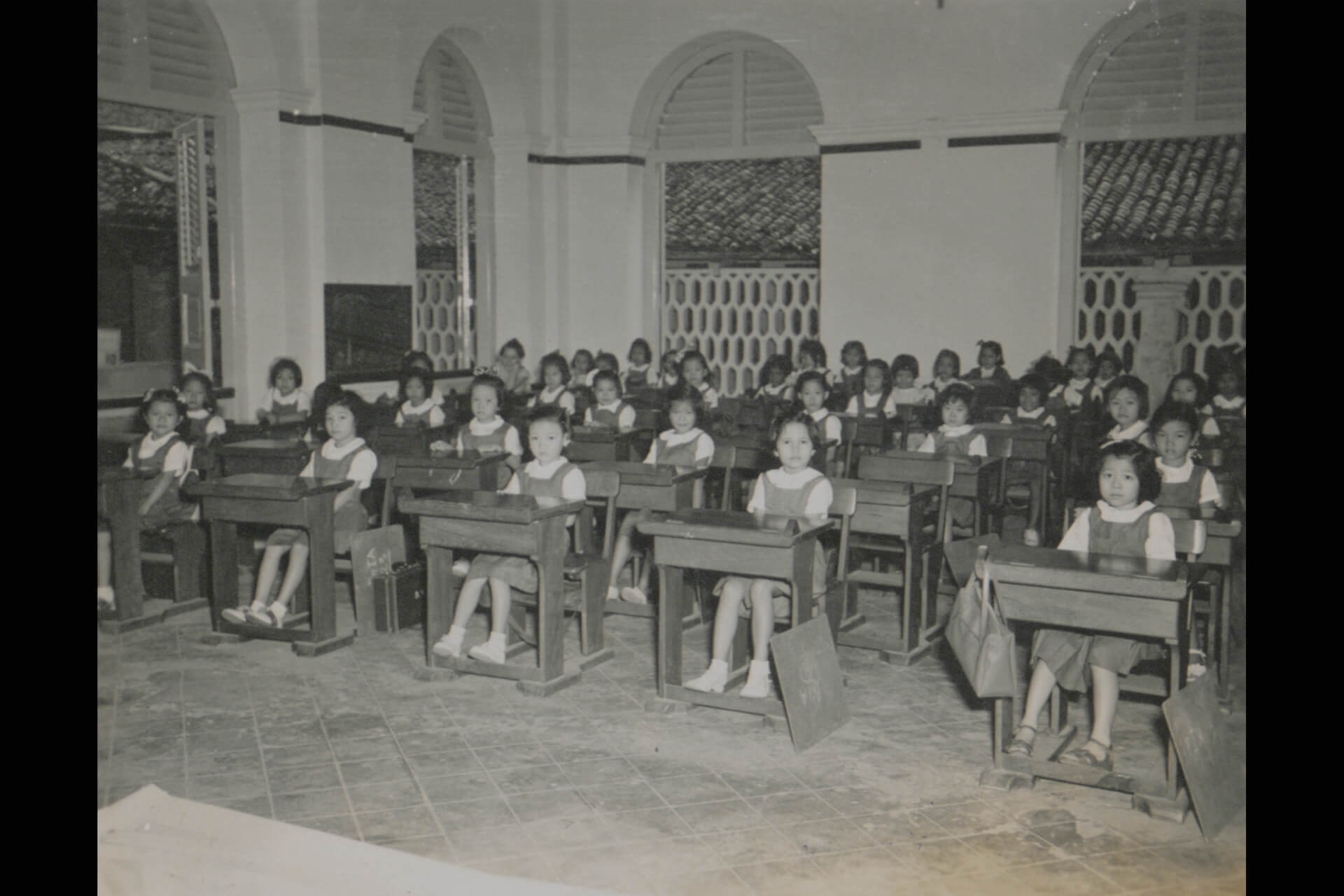
Singapore also used traditional characters in its earlier years. In the late 1960s, the Ministry of Education (MOE) introduced the first batch of the Table of Simplified Characters. Chinese-language textbooks and teaching in primary and secondary schools began to adopt these characters, which were later adopted by local Chinese newspapers and implemented across government agencies. Singapore thus became the first country outside China to promote and adopt simplified Chinese.
The revision and implementation of simplified characters in Singapore was a three-stage process.
Table of Simplified Characters issued in 1969
In July 1969, the MOE issued the Table of Simplified Characters for the first time. As it listed only 502 simplified characters, the public often referred to it as the “502-character table”. The MOE established the Committee on Simplification of Chinese Characters, which comprised chairman Chen Jin, secretary Chew King Hwan, and committee members Wong Tong Hoi, Foo Fook Jee, Lee Cheong Ngan, and Wu Nailiang. The preface to the table stated, “This is the first batch of 502 commonly used simplified Chinese characters that have been reviewed and revised”, implying that subsequent batches might follow. This marked Singapore’s first attempt at reviewing simplified characters. The table exhibits notable characteristics, as well as obvious shortcomings:
First, the table featured 10 simplified characters that were unique to Singapore, attracting widespread attention.
Table 1: 10 simplified characters unique to Singapore
| Singapore simplified character | 𡚩 | 囱 | 荅 | 觧 | 畄 | 皃 | 祘 | 伩 | 杀 | 咀 |
| China simplified character | 要 | 窗 | 答 | 解 | 留 | 貌 | 算 | 信 | 刹 | 嘴 |
| Traditional character | 要 | 窗 | 答 | 解 | 留 | 貌 | 算 | 信 | 剎 | 嘴 |
Second, some of the most frequently used characters were not prioritised for simplification. Among them were 書 (书, shu, meaning “book”), 槍 (枪, qiang, meaning “gun”), 厰 (厂, chang, meaning “factory”), 馬 (马, ma, meaning “horse”), 潔 (洁, jie, meaning “clean”) and 麺 (面, mian, meaning “noodle”). Conversely, certain less common characters, such as 擲 (掷, zhi, meaning “throw”) and 滲 (渗, shen, meaning “seep”), were simplified.
Third, the failure to establish a principle for analogical component-based simplification resulted in inconsistencies among characters that shared the same component or radical. Some of these characters were simplified, while others were left in their traditional form. The term “analogical component-based simplification” refers to the practice of standardising the simplification of characters that share a common component. For instance, the traditional character 車 (che, meaning “car”) was simplified to 车, and characters containing this radical were also simplified: 轉 (zhuan, meaning “turn”), 暈 (yun, meaning “faint”), and 陣 (zhen, meaning “formation”) were simplified to 转, 晕, and 阵 respectively. Unfortunately, the 1969 table lacked this systematic logic. For example, the right-side component of 儉 (jian, meaning “frugal”) and 撿 (jian, meaning “pick up”) was simplified to 俭 and 捡 respectively, but the character 臉 (lian, meaning “face”) was not simplified to 脸. Similarly, although the traditional character 見 (jian, meaning “see”) was simplified to 见, related characters such as 覌 (guan, meaning “observe”) and 覚 (jue, meaning “feel”) still retained their traditional configurations. This lack of uniformity occurred across numerous character groups.
When the first batch of 502 simplified characters was introduced, it was met with enthusiasm from the education sector and the public. The mass media also played a crucial role in promoting and publicising the changes, yielding positive results. The public began to accept and adopt these 502 simplified characters, which boosted the government’s confidence to press on with script reform, while both linguistic experts and the public offered suggestions for further refinement.
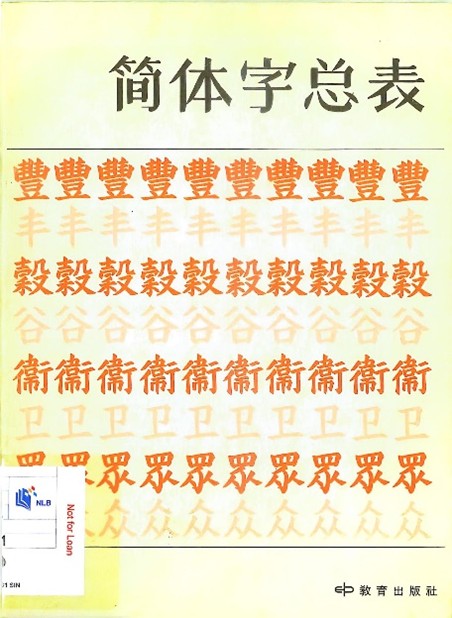
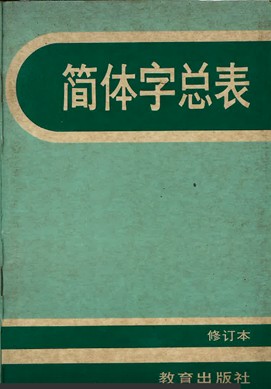
General Table of Simplified Characters issued in 1974
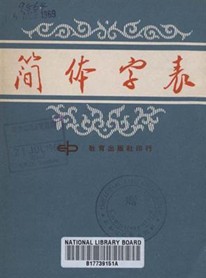
On 15 March 1974, the MOE officially issued the General Table of Simplified Characters, which contained 2,248 simplified characters and was commonly known as the “2,248-character table”.
The composition of this table comprised: (1) The 2,238 characters listed in the General Table of Simplified Characters compiled by the Committee for Language Reform in China; (2) Three standard characters (弃 qi, 却 que, 异 yi) from China’s First Batch of Tabulated Variant Forms of Chinese Characters; and (3) 10 simplified characters unique to Singapore from the “502-simplified character table” (Table 1), as well as 36 simplified characters that differed from those used in China (Table 2).2
Table 2: 36 simplified characters that differed from China’s scheme
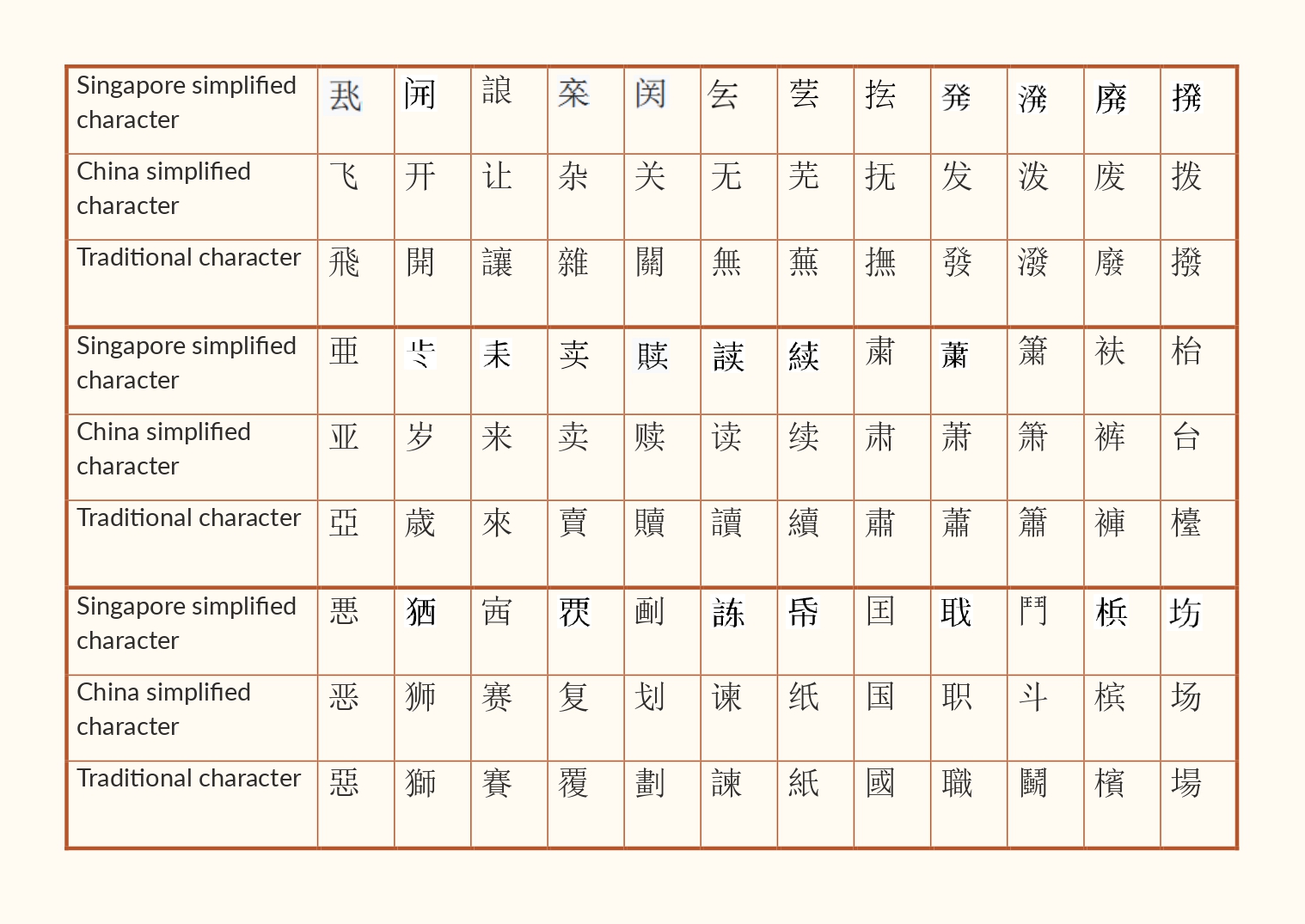
The total number of simplified Chinese characters in Singapore increased from the initial 502 to 2,248, but they were not issued in batches as originally planned.3 The main reason for this was that the authorities realised that releasing simplified characters in batches would force printing houses to constantly update their font libraries and Chinese typewriters, which would disrupt printing, typesetting, page layout, and proofreading workflows. Furthermore, there was a significant risk that printing houses might adopt a passive attitude towards the reforms — rather than continuously investing in font updates, many might have chosen to delay their adoption of them, persisting with traditional characters until the next batch of simplified characters was released. This would severely hinder the adoption of simplified characters and go against the goal of having them implemented.
Revised General Table of Simplified Characters issued in 1976
As the 2,248-character table contained certain simplified characters that differed from those issued in China — particularly the above-mentioned simplified characters unique to Singapore — various forms of simplified characters began to appear in locally printed products. This caused confusion in both the teaching and printing of Chinese characters. Following recommendations from various parties, the MOE tasked the Committee on Simplification of Chinese Characters with re-examining the 2,248-character table. The committee removed the simplified characters unique to Singapore, as well as those which differed from China’s, before releasing the Revised General Table of Simplified Characters in May 1976.
While the revised table was not entirely identical to China’s simplified characters, every effort was made to ensure that Singapore’s simplification methods aligned with China’s, and that the stroke forms of the Chinese characters used locally were consistent with those adopted in China.4 The revised table was also more comprehensive. For example, while the 2,248-character table consisted of four sections, the revised edition added a fifth section in the form of an appendix. This included a table of variant characters and a comparison chart of new and old character forms, making the table easier to refer to and use.
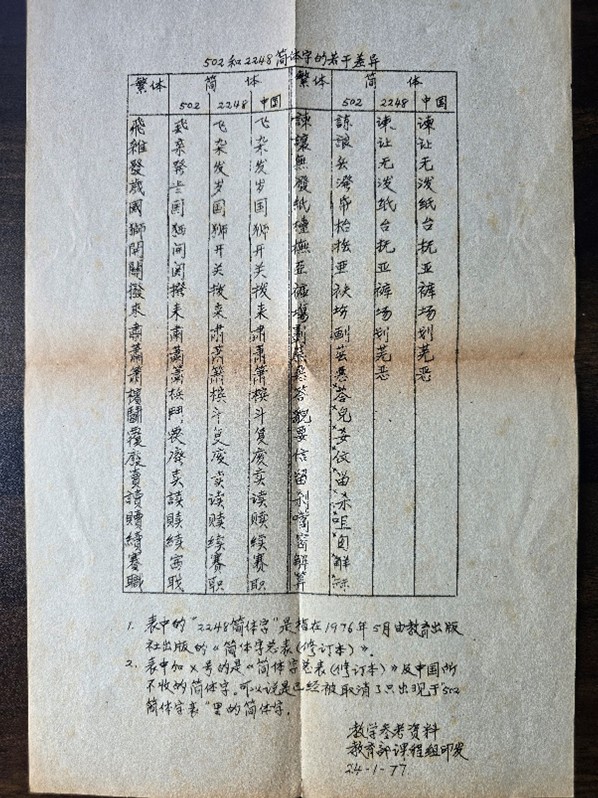
On 24 January 1977, the MOE’s curriculum unit issued teaching reference material Some Differences Between the 502 and 2248 Tables of Simplified Characters to help primary and secondary school teachers better understand and implement the Revised General Table of Simplified Characters. This material provided character-by-character comparisons of traditional characters, local simplified characters (as listed in the 502- and 2,248-character tables) and China’s simplified characters to help teachers grasp and apply them.
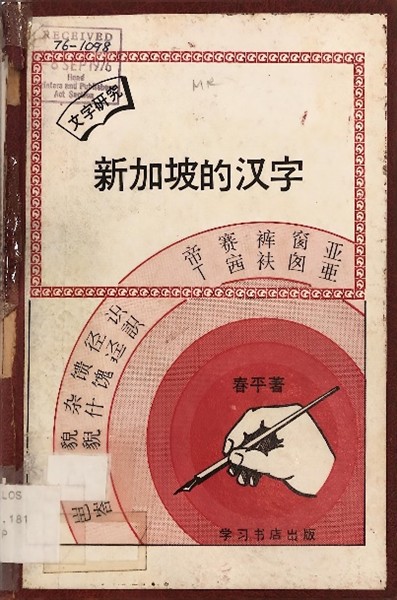
Effectiveness of promoting simplified Chinese characters
Compared with traditional characters, simplified characters have many advantages. They have fewer strokes and simpler structures, which makes them easier to read and write. However, simplified characters also have their shortcomings. The harshest criticism is that they undermine the structural logic of Chinese characters and sever the connection between the forms of many characters and their original meanings. This has drawn ridicule and criticism from those who favour traditional characters. For instance, 愛 (ai, meaning “love”) became the simplified 爱 without the 心 (xin, meaning “heart”); 親 (qin, meaning “kin”) became the 亲 without 見 (jian, meaning “see”); 運 (yun, meaning “transport”) became the 运 without 車 (che, meaning “car”); and 導 (dao, meaning “guide”) became 导 without 道 (dao, meaning “path”). Nevertheless, given the advantages of simplified characters, Singapore’s tables of simplified characters were widely welcomed across all levels of society at that time.
Replacing traditional characters with simplified ones was a complex and far-reaching systemic undertaking that could not be accomplished overnight. It affected not only textbooks and the teaching of Chinese characters in basic education, but also media, publishing, culture, and government agencies. It was precisely because the transition required cooperation from society that Singapore’s Ministry of Culture issued a circular in December 1983 instructing all government departments and statutory boards to adopt simplified characters. It also mandated the full adoption of simplified characters within three years, applying to all Chinese publications, advertisements, public notices, signboards, and wayfinding signage. Companies using Chinese typewriters with traditional characters were also asked to switch to simplified characters.5
Given that Singapore is a cosmopolitan city open to global influences, it is unsurprising that China’s simplified characters, and traditional characters used in Taiwan and Hong Kong, have had an impact on the local Chinese community. This explains why both traditional and simplified characters can sometimes be seen in local hawker centres and restaurants. Nonetheless, with the widespread adoption of computers in recent decades, the growing sophistication of Chinese typesetting and input methods, the ease of converting between simplified and traditional characters, and the increasing standardisation of Chinese characters, simplified characters have come to be fully accepted by the local community in Singapore.
This is an edited and translated version of 新加坡的简体字. Click here to read original piece.
| 1 | See “Zhuyin zimu yu jianbizi” [Phonetic symbols and simplified characters], Nanyang Siang Pau, 26 November 1968. |
| 2 | See the teaching reference material issued by the Ministry of Education’s curriculum section on 24 January 1977, Some Differences Between the 502 and 2248 Tables of Simplified Characters, and Chia Shih Yar, Xin zhong ri jiantizi yanjiu [A study on simplified characters used in Singapore, China and Japan] (Beijing: Language & Culture Press, 1992), 71. |
| 3 | “Li Zhaoming buzhang huyu baoguan, chubanjie ji dianshitai deng, xiezhu tuixing huawen jiantizi” [Lee Chiaw Ming calls on media and publishers to promote simplified characters], Nanyang Siang Pau, 16 March 1974. |
| 4 | See Chia Shih Yar, Xin zhong ri jiantizi yanjiu [A study on simplified characters used in Singapore, China and Japan] (Beijing: Language & Culture Press, June 1992), 75–77. |
| 5 | “Ge zhengfu bumen jiang caiyong jianti hanzi” [Government departments to adopt simplified characters], Lianhe Zaobao, 20 December 1983. |
Chia, Shih Yar. Xin zhong ri jiantizi yanjiu [A study on simplified characters used in Singapore, China and Japan]. Beijing: Language & Culture Press, 1992. | |
Chia, Shih Yar. Xinjiapo hanzi guifan de huigu yu qianzhan: Disijie guoji hanzi taolunhui lunwenji [Review and prospect of standardisation of Chinese characters in Singapore: Proceedings of the fourth International Conference on Chinese Characters], 26 November 1997. | |
Chinese Character Reform Committee, ed. General Table of Simplified Characters (1964). Beijing: Chinese Character Reform Press, 1964. | |
Chun Ping. Chinese Characters in Singapore. Singapore: Xuexi Book Store, 1976. | |
Committee on Simplification of Chinese Characters Appointed by the Ministry of Education. Revised General Table of Simplified Characters. Singapore: Educational Publications Bureau, 1976. | |
State Language Commission of China. General Table of Simplified Characters (1986). Beijing: Language & Culture Press, 1986. | |
Wei, Li, ed. Zuixinban yuyan wenzi guifan shouce [Handbook on the standardisation of the Chinese language]. Beijing: The Commercial Press, 2014. |