Hakka food in Singapore


The Hakkas were a nomadic and scattered people for much of their history. Thought to have originated from China’s Central Plains (present-day Henan province), they migrated progressively southwards in five major waves starting from the fourth century, fleeing social unrest, invasions and other ills. Over the centuries, they fanned out into hilly or landlocked parts of Guangdong, Fujian, Guangxi, Jiangxi, Taiwan, and beyond. As they were late arrivals in southern China, they came to be known as “Hakka” (literally “guest people”). Eventually, many Hakkas fled even further south — this time to Southeast Asian regions such as Indonesia, Malaysia, and Singapore.1
The Hakkas’ long history as refugees and farmers in poor, inhospitable conditions left an indelible imprint on their cuisine. Hakka food, traditionally humble fare, has three main characteristics: salty, greasy, and fragrant. Salty, because food was often salted to make it last longer, and because labourers sweated a lot and needed more salt in their diets. Greasy, to fill bellies. Fragrant, to make simple food more appetising.2 Traditional Hakka dishes such as salt-baked chicken, and pork belly with preserved mustard greens, are testament to the Hakkas’ resilience amid adversity.
Diverse clans and counties
Today, the Hakkas are the fourth-largest Chinese dialect group in Singapore, making up about 200,000 of the country’s population. In the early days, they settled in areas such as South Bridge Road, North Bridge Road, Lorong Tai Seng, eking out a living in construction, furniture production, and other working-class trades. They also dominated the pawnbroking and traditional Chinese medicine industries, and farmed on Tekong Island.
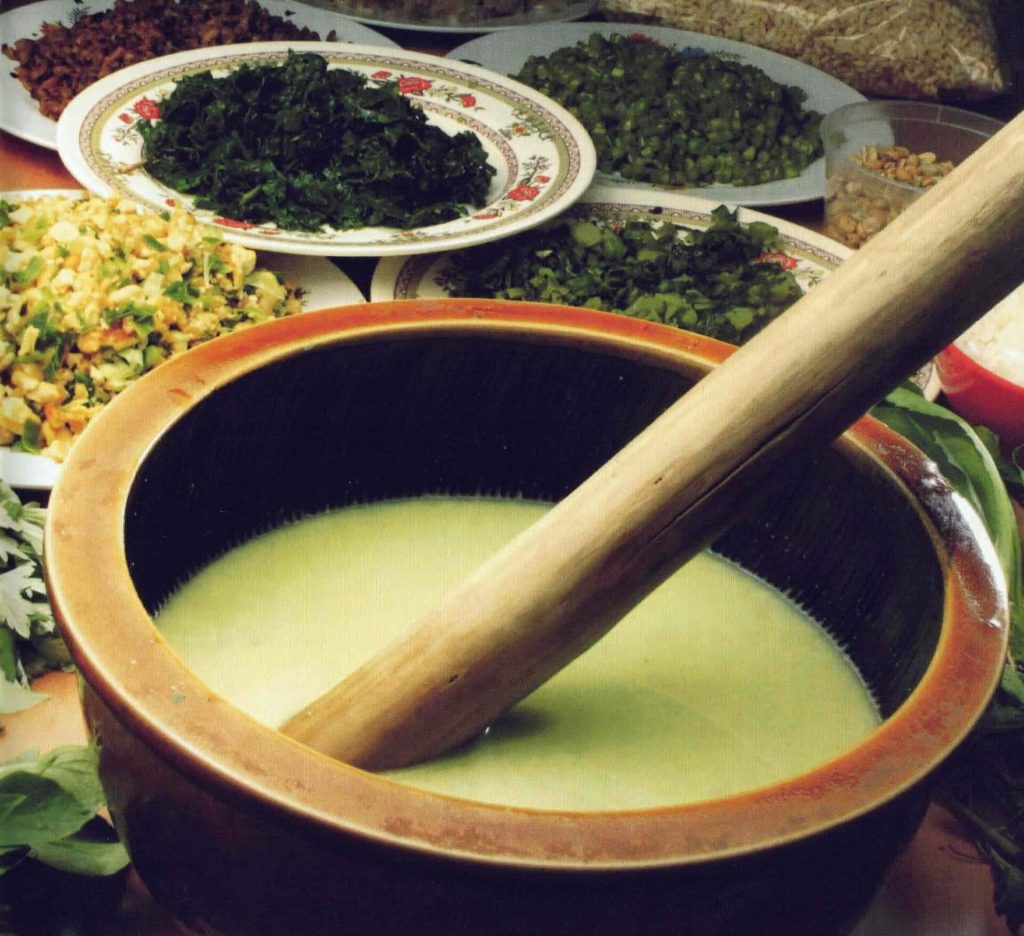
While certain Hakka foods such as yong tau foo (meat-stuffed beancurd) have long been made and eaten by most Hakkas in Singapore, the community’s scattered distribution across China — and lack of a connected geographic homeland — had also led to the emergence of dishes that were unique to specific counties. Consequently, how prominent a particular Hakka dish is in Singapore has much to do with the number of immigrants who came from the place the dish was made. For example, Dabu county in Meizhou, Guangdong — the ancestral homeland of many Singaporean Hakkas — is famous for its abacus seeds, which are gnocchi-like “coins” fashioned from taro and tapioca flour. This dish would have been less unfamiliar to the Singapore Hakkas from Meixian county, Meizhou, who are known instead for their radish balls. Meanwhile, the healthful dish of “thunder tea rice” is associated with the Hepo clan of Jiexi county in Jieyang, Guangdong, but may not have been made at home by most other Hakkas in Singapore.3
The most well-known examples of Hakka food in Singapore are yong tau foo, abacus seeds, thunder tea rice, pork belly with preserved mustard greens, and salt-baked chicken.
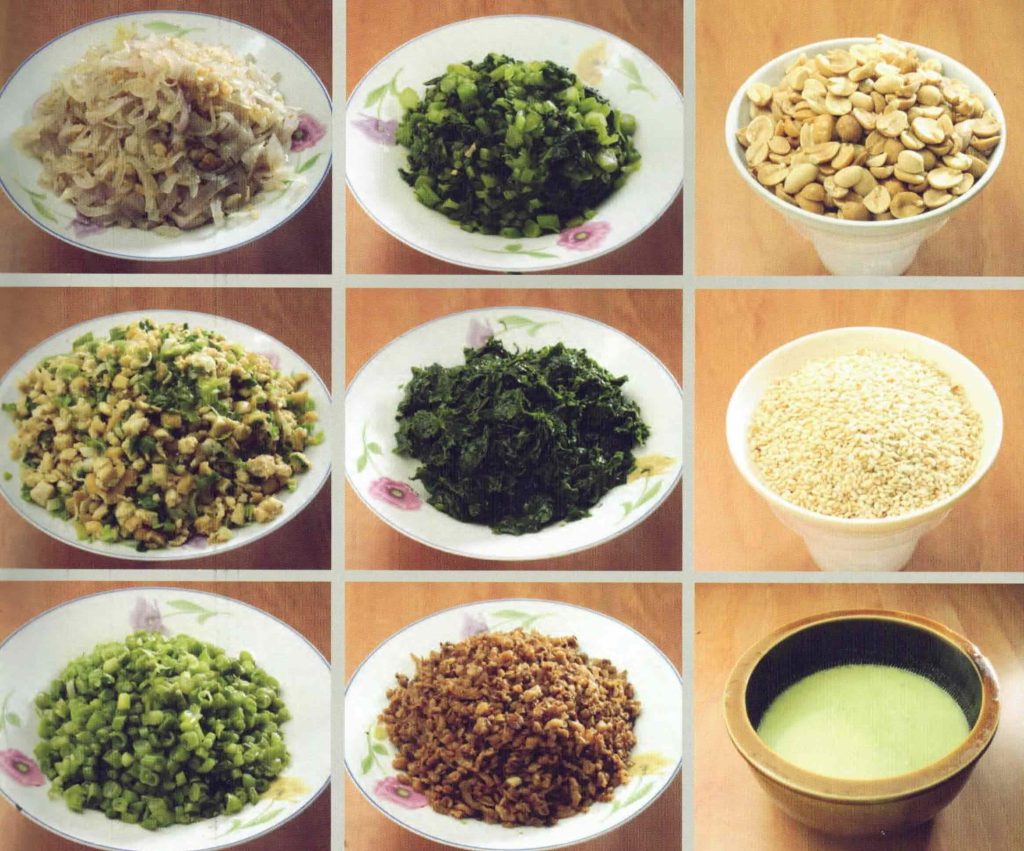
Five famous foods
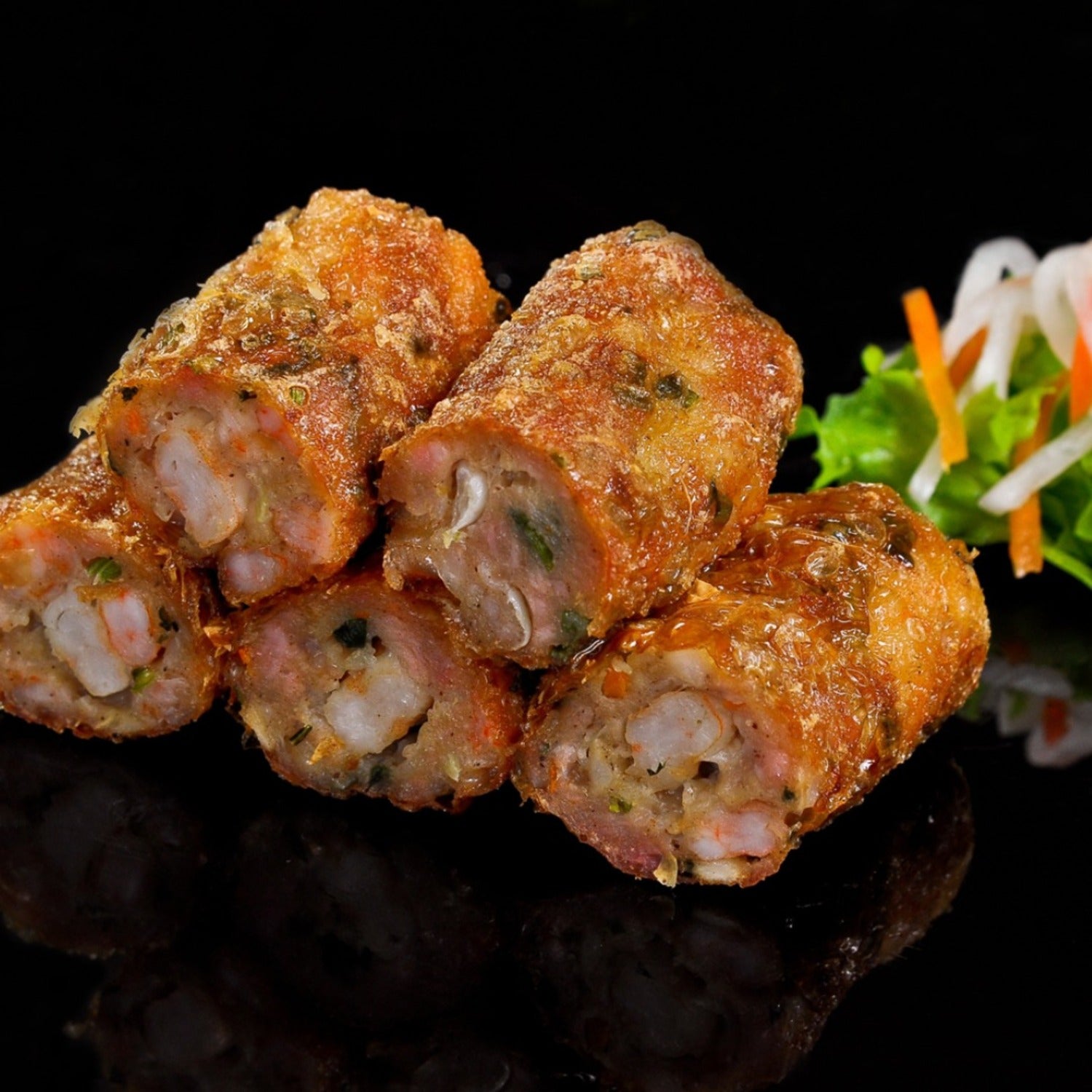
A common sight in food courts and hawker centres across the island today, yong tau foo traditionally consists of minced pork stuffed in tofu. It is thought to have been invented when Hakka folk who had fled south found that they could not continue the northern custom of making jiaozi (meat dumplings) during Chinese New Year, since wheat flour was not readily available. As a result, they stuffed meat in beancurd rather than enclosing it in jiaozi skin, giving rise to yong tau foo (literally “filling bean curd”). There are several notable differences between traditional Hakka yong tau foo and the variety commonly sold in Singapore. First, most hawkers in Singapore tend to stuff not just beancurd, but also vegetables such as bitter gourd and eggplant. Second, fish paste is frequently used as stuffing instead of minced pork, since seafood is more plentiful in Singapore compared to the landlocked regions of China.
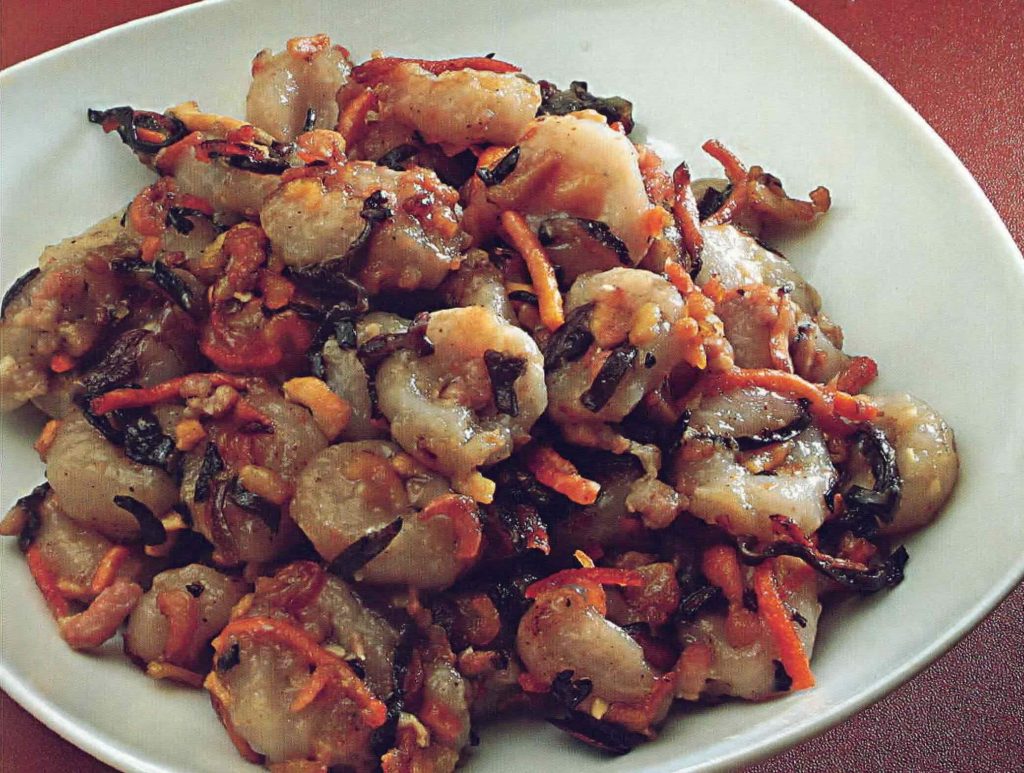
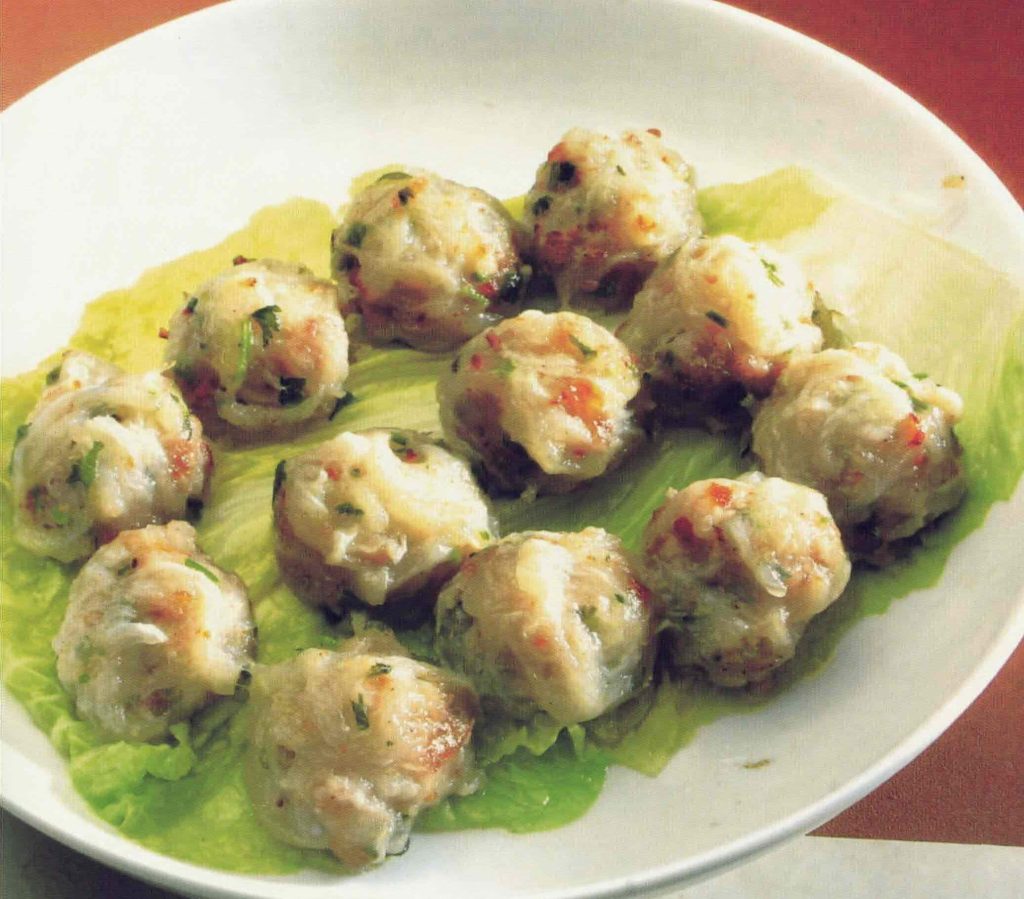
As Hakkas often settled in mountainous areas where the land was less fertile and food more scarce, they became masters of food preservation methods such as salting, pickling, and sun-drying.
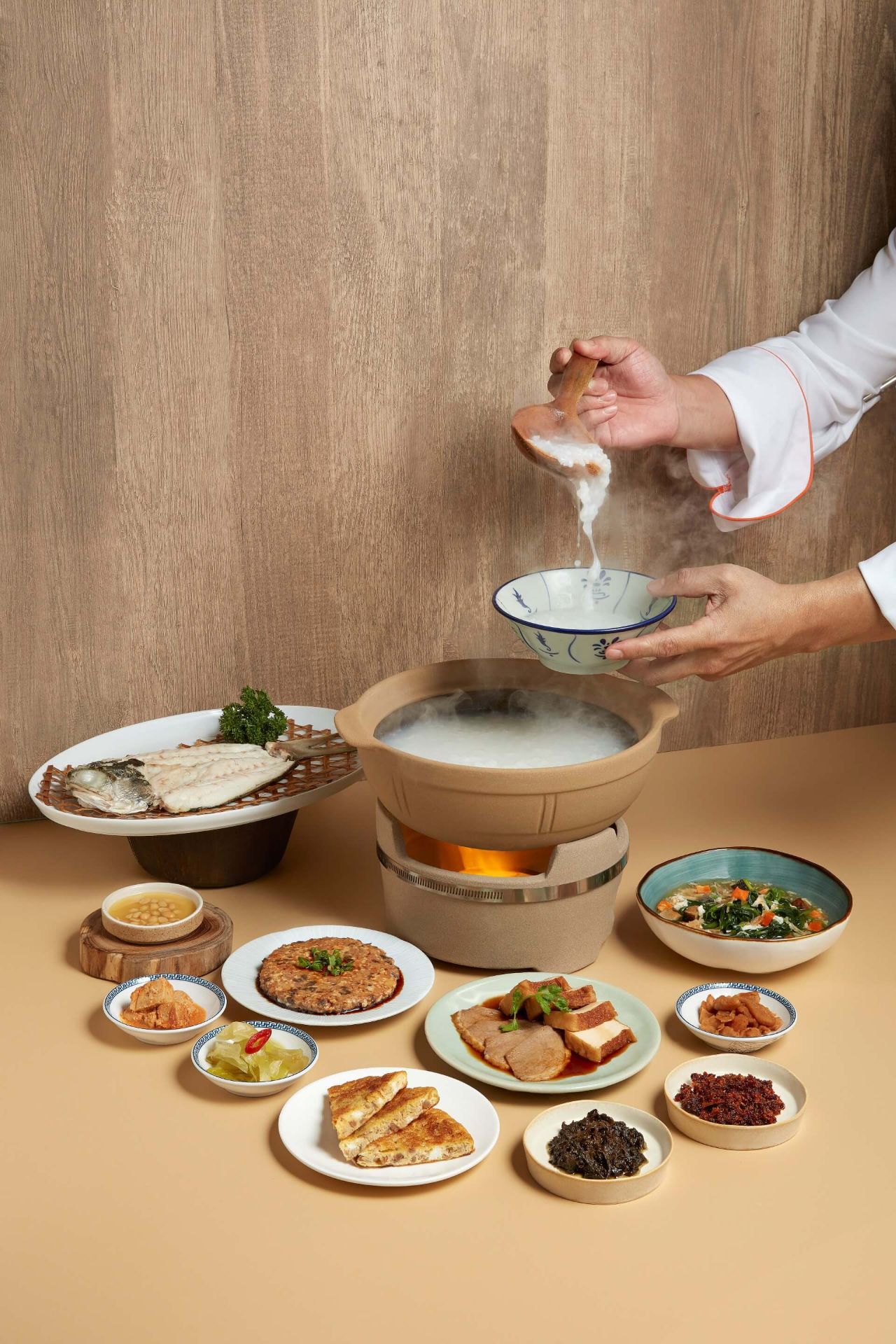
One dish associated with the Pingyuan Hakkas is pork belly with preserved mustard greens (meicai kourou). Unlike the Hokkien braised pork belly dish of kong bak, the Hakka version eschews cinnamon and star anise and contains less garlic, instead opting for salty-sweet mustard greens (pickled in salt) to balance the greasiness of the pork — typically “seven parts fat, three parts lean”, although the reverse is now true as people grow more health conscious. Since the sound of the word mei has unlucky connotations, the Xingning Hakkas instead braise their pork belly with red yeast rice during festive occasions. This imparts the dish, known as hong men zhurou, with an auspicious red hue.6
Hakka salt-baked chicken, a specialty from Dongjiang, is believed to have been invented by accident some 300 years ago, after a person working in salt production wrapped a piping-hot chicken in paper and stowed it in a heap of salt to save it for later — discovering, to his happy surprise, that the aroma from the heated salt had infused the chicken. This evolved into what is now known as salt-baked chicken, where a whole chicken is seasoned with ginger powder in sesame oil and wine, and then wrapped in paper and buried in coarse sea salt in a wok where it is cooked for about an hour. Hakka salt-baked chicken, which is also a popular confinement dish, was typically a signature item at Hakka restaurants in Singapore, including the now-defunct Moi Kong and Plum Village. Salt-baked chicken was the successor to the earlier dish of “salt-simmered chicken”, where chicken was cooked in brine and then covered in salt to preserve it for longer. To stave off their hunger, Hakka refugees would rip out shreds of meat with their hands and eat it on the run.
Other dishes and desserts
Many traditional Hakka dishes are lesser-known in Singapore. One of them is the Fengshun Hakkas’ chun guan chang, where whisked eggs are poured into cleaned-out pork intestines and then steamed. This sausage-like dish (originally made using chicken intestines) is served during Chinese New Year, which is apt because the Hakka word for egg, “chun”, sounds like the word for “spring”. Then there is the Jiaoling Hakkas’ san jidi soup, comprising salted vegetables, wine lees (wine yeast residue), and three cuts of pork — pork liver, pork intestines, and lean pork — representing the top three ranks in the Chinese imperial examinations. Other uncommon foods include stuffed oysters; Huizhou-style fried pork slices (cooked with fermented red bean curd); the Yongding Hakkas’ “yam” buns, whose skins are made from taro and tapioca flour; and the pillow-shaped glutinous rice dumplings favoured by the Guangxi Hakkas. Furthermore, in a Southeast Asian twist, some Singapore Hakkas opt to stir-fry pig’s intestines with pineapples, which are abundant in the region, rather than sticking to the traditional method of cooking leftover intestines with preserved mustard greens.
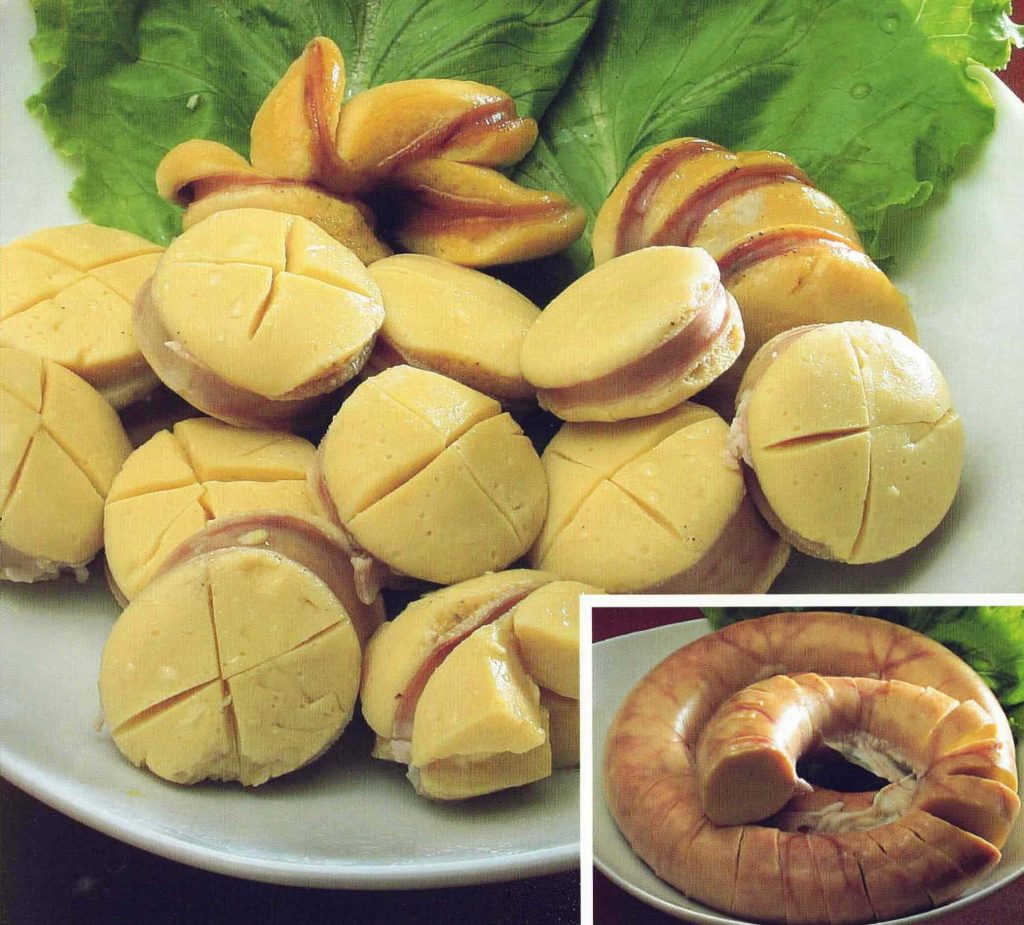
Not unlike other Chinese dialect groups, some Hakkas also look forward to poon choy during Chinese New Year. This is a pot packed with a rich medley of ingredients in a broth — such as radish, pork trotters, chicken, and prawns.
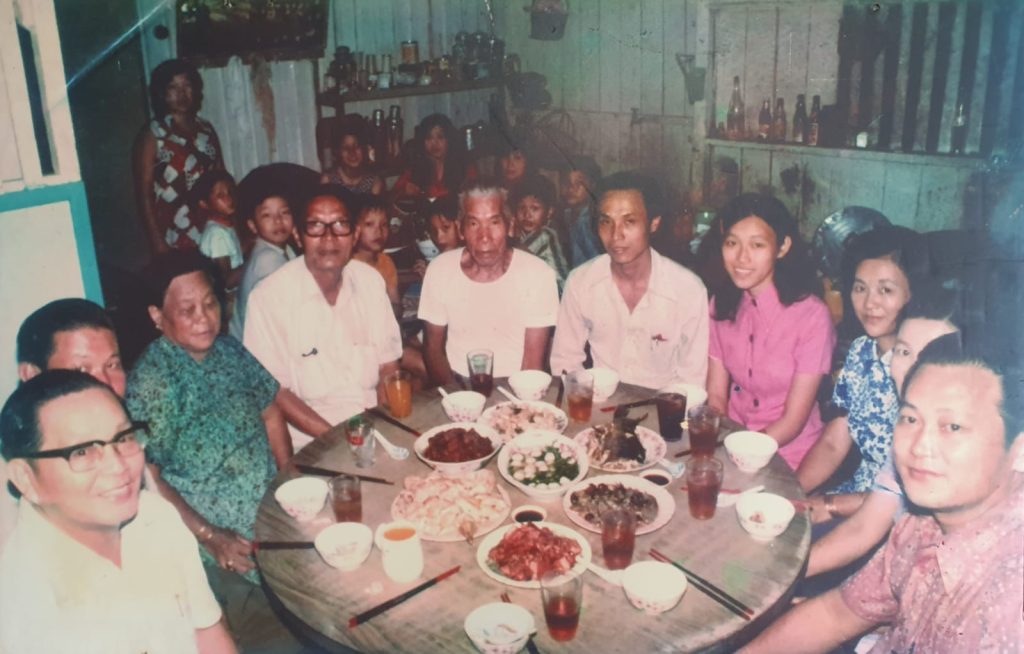
One vanishing Hakka custom in Singapore is the practice of home-brewing glutinous rice wine, also known as huang jiu (yellow wine). Such wine, thought to have nourishing properties, was traditionally brewed by Hakka women and added to confinement dishes such as rice-wine chicken for their daughters or daughters-in-law — which explains why it is also known as “mother’s wine”. In the spirit of letting nothing go to waste, the wine lees would often be cooked with other dishes, such as prawns and the aforementioned san jidi soup.
Given their lives of hardship and poverty, the Hakka were not known for indulging in many desserts.7 Nonetheless, there are a few notable examples, such as tangyuan (glutinous rice dumplings), ciba (glutinous rice balls coated with peanut and sugar powder), sweet potato soup (a diluted sweet potato puree), and chin chow, a herbal grass jelly made from the Chinese mesona plant, that is added to drinks and desserts and is also popular among the different Chinese dialect groups in Singapore.
Restaurants through the years
Hakka hawkers have been plying their trade on the island since at least the early 20th century. In the early days, hawkers selling beef balls, bamboo shoot rice cakes, abacus seeds and tze char (“cook and fry”) dishes could be found in the Hock Lam Street, Bugis Street, and Nankin Street areas.
The Hakka restaurant scene only started to take off from the late 1960s, around the time Hakka food was gaining popularity in Hong Kong. Several chefs from Hong Kong ended up working in Hakka restaurants in Singapore — including at New Hooveroom, founded in Toa Payoh in 1969 by a group of Hakkas in Singapore;8 and Golden Jade Tsui King Lau Restaurant, a Hakka and Cantonese restaurant that opened in Seah Street in 1975 and was a popular venue for wedding banquets. In the 1970s, Hakka restaurants from Kuala Lumpur, Malaysia also began setting up branches in Singapore.
By the 1980s, the Hakka restaurant scene had entered its “golden age” in Singapore, with as many as seven or eight such restaurants vying for business.9 Unfortunately, all have since closed down. Among them were old stalwarts such as Moi Kong Hakka Restaurant, which opened in Murray Street in 1977 after starting as a tze char stall in a coffeeshop in Nankin Street in the 1960s;10 and Plum Village Hakka Restaurant, set up in Jalan Leban in 1983 by Lai Fak Nian;11 as well as Merry Go Lucky Eating House in Selegie Road and Hakka Restaurant in Raffles Boulevard. Others, such as Kew Garden Restaurant and Goldhill Hakka Restaurant, sprang up in later decades.12
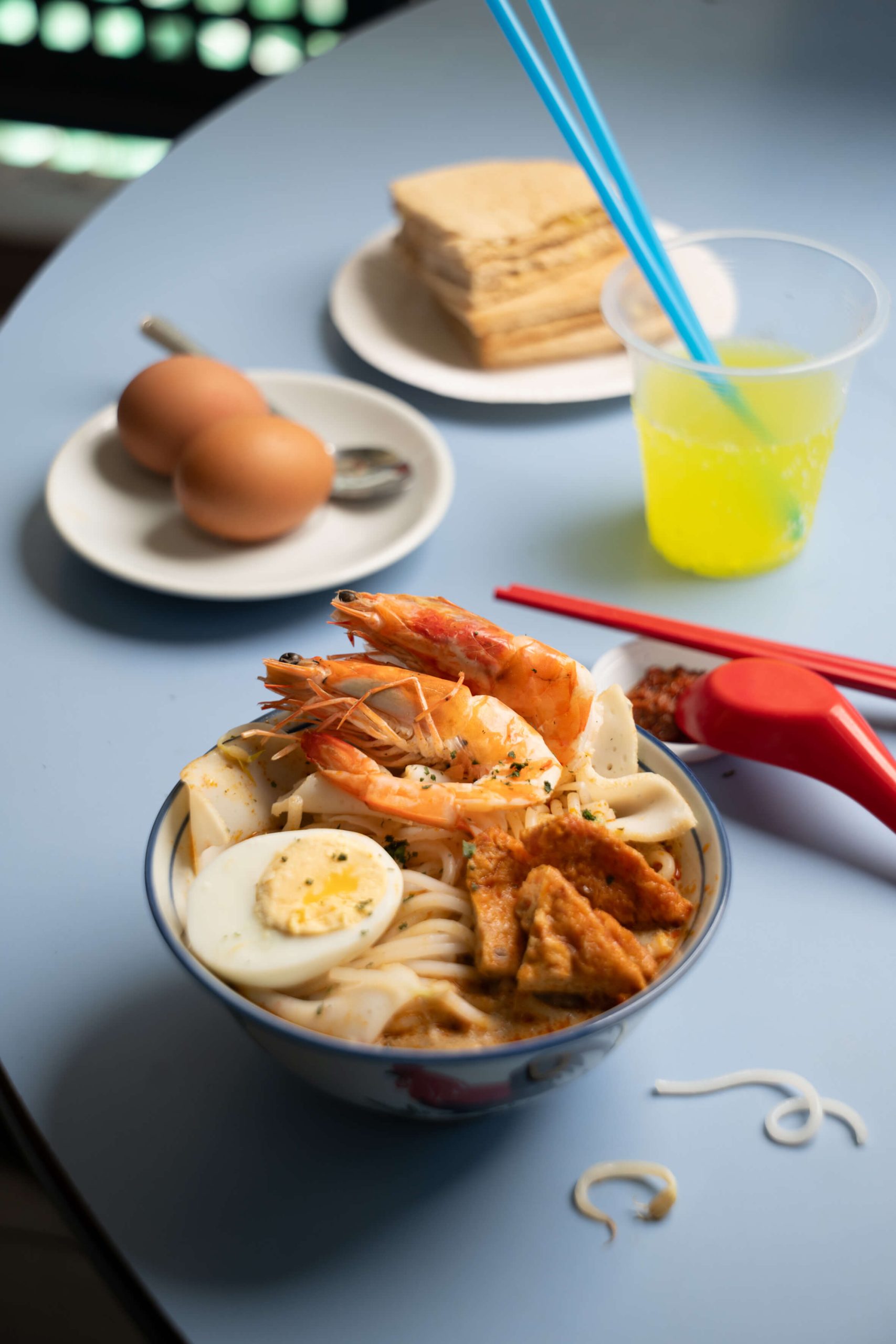
Today, there are hawkers across the island focusing on specific dishes such as yong tau foo, thunder tea rice, beef balls, and Hakka noodles (wheat noodles that are wider than mee kia). The 2025 closure of Plum Village restaurant, the last of the old-school Hakka restaurants in Singapore, may have sounded an ominous note for the future of local Hakka fare, although the opening of new Hakka restaurants in recent years — and a growing interest from younger Hakkas seeking to reconnect with their culinary roots — perhaps offer some hope for the cuisine’s survival in Singapore.
| 1 | There were already Hakkas in Singapore in the early 19th century, although the population was small. |
| 2 | Kejia shipu [Hakka cook book] (Singapore: Nanyang Khek Community Guild, 2009), 2. |
| 3 | Author’s interview with Lai Fak Nian, owner of Plum Village Hakka Restaurant, 27 October 2025. |
| 4 | Author’s interview with Lai Fak Nian, 27 October 2025. |
| 5 | Nam Yun Zhou, “Jiapo shou mifang, xin kenv xiaofan chuangye mai leicha” [Woman teaches secret recipe; hawker starts leicha business], Lianhe Zaobao, 8 January 2019. |
| 6 | Denise Tan, “At Plum Village, actor Jeremy Chan discovers Hakka pen cai, yong tau foo, radish balls and more,” CNA, 23 May 2024. |
| 7 | Author’s interview with Lai Fak Nian, 27 October 2025. |
| 8 | New Hooveroom was relatively short-lived, lasting only about a decade before shuttering for good. |
| 9 | Tang Ai Wei, “Gudu Meicun bu yan bai, Keyu xin cai wang chun feng” [Lonely Plum Village not calling it quits; Hakka Yu offers new dishes and looks ahead], Lianhe Zaobao, 14 December 2024. |
| 10 | Moi Kong’s founder hailed from Meixian county in Guangdong. Linda Lau Anusasananan, The Hakka Cookbook: Chinese Soul Food from around the World (California: University of California Press, 2012). |
| 11 | Lai Fak Nian is the son of Lai Kai Loong, one of the founders of New Hooveroom (Xin Xiong Hua). Plum Village, which closed in 2025, had three sister restaurants in Lim Teck Kim Road, Lloyd Road, and Lavender Street, which have also closed down. As Lai’s family hails from Meixian, the restaurant originally served more Meixian-specific fare, before widening its offerings to include dishes from other Hakka clans. Lai attributes the restaurant’s survival for more than 40 decades to this decision. Author’s interview with Lai Fak Nian, 27 October 2025. |
| 12 | Kew Garden Restaurant and Goldhill Hakka Restaurant have also closed down. |
Anusasananan, Linda Lau. The Hakka Cookbook: Chinese Soul Food from around the World. California: University of California Press, 2012. | |
Au, Yue Pak. “Kejia zuxian de qianxi lishi” [Hakka ancestors’ history of migration]. Lianhe Zaobao, 11 February 1996. | |
Conceicao, Jeanne Louise. “Hakka community.” National Library Board, Singapore. | |
“The Food That Made Me: Chef Pang & The Guest People”, CNA Insider, YouTube video, 10 March 2020. | |
Liew, You Choo.“Kejia meishi yanjuji Guangdong fengwei” [Hakka salt-baked chicken, Guangdong style]. Lianhe Zaobao, 11 June 2006. | |
Liew, You Choo. “Meicai kourou zui fengguang de kejia cai” [Pork belly with preserved mustard greens: the greatest Hakka dish]. Lianhe Zaobao, 5 October 2008. | |
Nan, Feng. “Kejia leicha ningju xiangqing yu qinqing” [Hakka thunder tea rice strengthens feelings of home and familial bonds]. Lianhe Zaobao, 7 November 1996. | |
Kejia shipu [Hakka cook book]. Singapore: Nanyang Khek Community Guild, 2009. |