From temples to shopping malls: A century of Chinese vegetarian food in Singapore


To many diners today, mock char siew noodles or vegetarian beehoon are just a few options in an increasingly meat-free landscape made up of cauliflower wings and Impossible burgers. In fact, Chinese vegetarian food has a history that stretches back centuries. It was born of a confluence of spiritual convictions which were eventually brought to Singapore by Chinese migrant communities. This article traces how thanks to a great deal of devotion and entrepreneurship, what could initially only be found in monasteries and religious halls became a ubiquitous part of mainstream Singaporean cuisine.
Religious roots
The first precept of Buddhism is to abstain from killing any living beings.1 Moreover, the Mahayana tradition, which almost all Chinese Buddhists in Singapore belong to, warns against the consumption of not only meat but also the wuxin (“five pungent foods”), usually including Chinese leek, chives, garlic, leek, and onion. Fundamental Mahayana texts describe them as inherently impure because of their tendency to excite the senses — they are thought to become aphrodisiacs when cooked and inflame agitation if taken raw.2 Their strong odour is also said to repel protective deities while attracting hungry ghosts, who linger around the eater until his accumulated merit is depleted. Mahayana Buddhism spread from India to China around the first or second century CE. It began to flower in the fifth century under the rule of Emperor Wu of Liang, who used flour to make sacrificial animals and encouraged lay followers to adopt a vegetarian diet.3 Vegetarianism was not an alien concept in China to begin with. Numerous Taoist teachings, for instance, similarly emphasise non-violence and the minimisation of harm towards sentient beings. Going further back, since the Zhou dynasty, it was already common practice to abstain from meat on the first and 15th days of each lunar month.
From the Ming and Qing dynasties onwards, syncretic religious associations such as the Xiantiandao (“Way of Former Heaven”) in the Jiangxi and Sichuan provinces began to emerge. Drawing on a mixture of Buddhist and Taoist ideas like those just discussed, they preached a life of chastity and vegetarianism. Women who joined these groups lived communally, retaining their hair and supporting themselves through handiwork or ritual services. They were not ordained nuns, but their vows and routines gave them an identity distinct from secular women. Owing to their strict vegetarianism, they came to be known as zhaigu (“vegetarian aunts” or “vegetarian nuns”) and the communal halls that they ran, zhaitang (“vegetarian halls”).4 Each hall typically housed 10 to 30 women and followed strict rules: no meat or alcohol; morning and evening chanting; and participation in vegetarian feasts twice a month. In return, the hall promised “care while alive and a funeral at death” (sheng you yang, si you zang).5
Early vegetarianism in Singapore
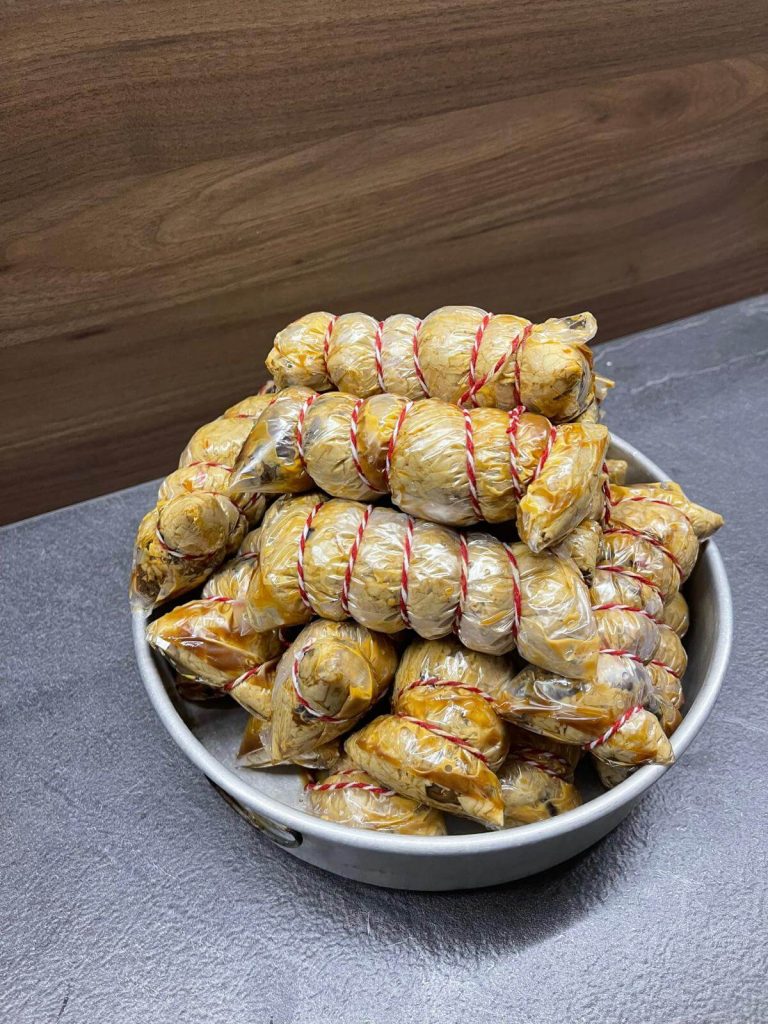
By the late 18th century, the robust vegetarian culture in China had been brought by migrants to Southeast Asia. Upon establishing themselves in Singapore, Buddhist monastics continued practising and preaching vegetarianism, while maintaining specific food traditions tied to festive occasions, for instance serving laba zhou (“eight-treasure porridge”) to devotees on the eighth day of the 12th lunar month to commemorate the Buddha’s enlightenment.6 During the Buddha’s Birthday, volunteers at temples could knead and wash up to 80 bags of wheat flour over three days to extract mianjin (wheat gluten), which would then have been shaped and fried into vegetarian char siew and sausages.7 More important to the monastics themselves was the “Five Contemplations” to be done before eating: reflecting on where the food came from, whether one deserves it, one’s mindset while eating, treating food as sustenance, and consuming it to fulfill spiritual practice. In other words, vegetarianism was not a mere dietary choice, but an exercise in mindfulness.8
Meanwhile, zhaigu whose faith had been suppressed by mainland Chinese officials during the Qing period found safe haven in Singapore. Leaders of the syncretic religions, most of whom were Hakka, Teochew, and Cantonese, began setting up zhaitang across the island, with the earliest halls, which also housed destitute or orphaned women, including Shanfu Tang, Shannan Tang, and Tongshan Tang. Another early zhaitang located on Waterloo Street, Tiande Tang (“Hall of Heavenly Virtue”), was established in 1884 and known by the public as Kwan Im Thong Hood Cho Temple.
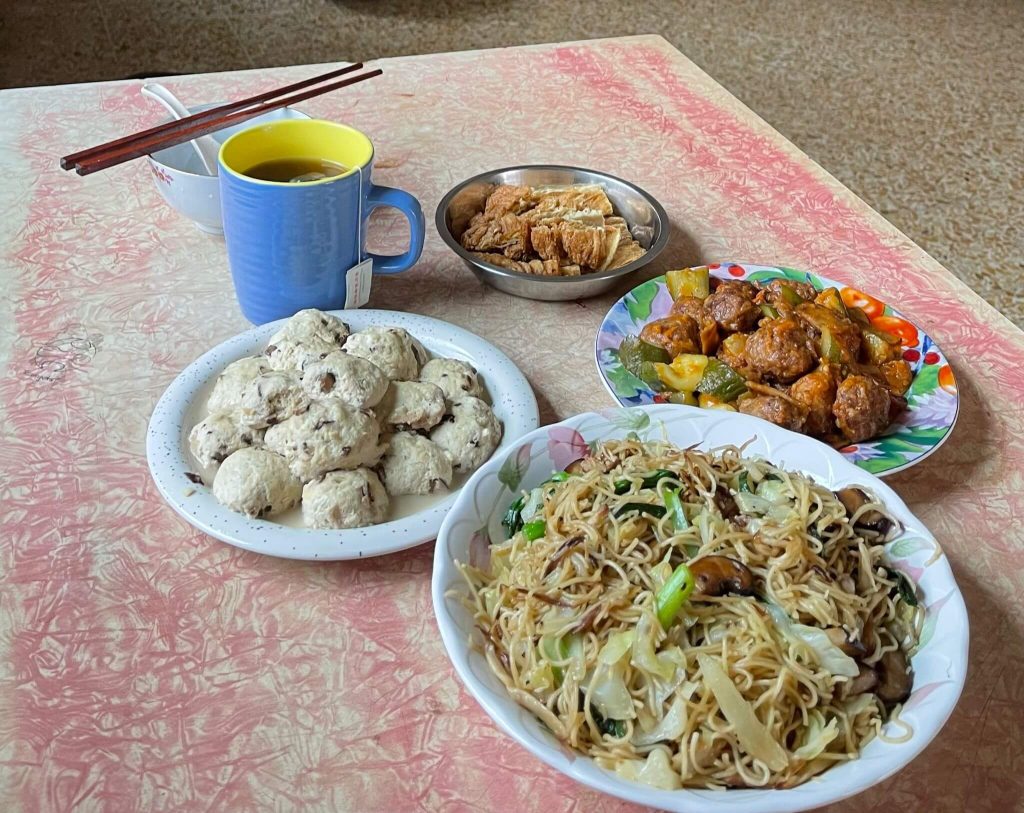
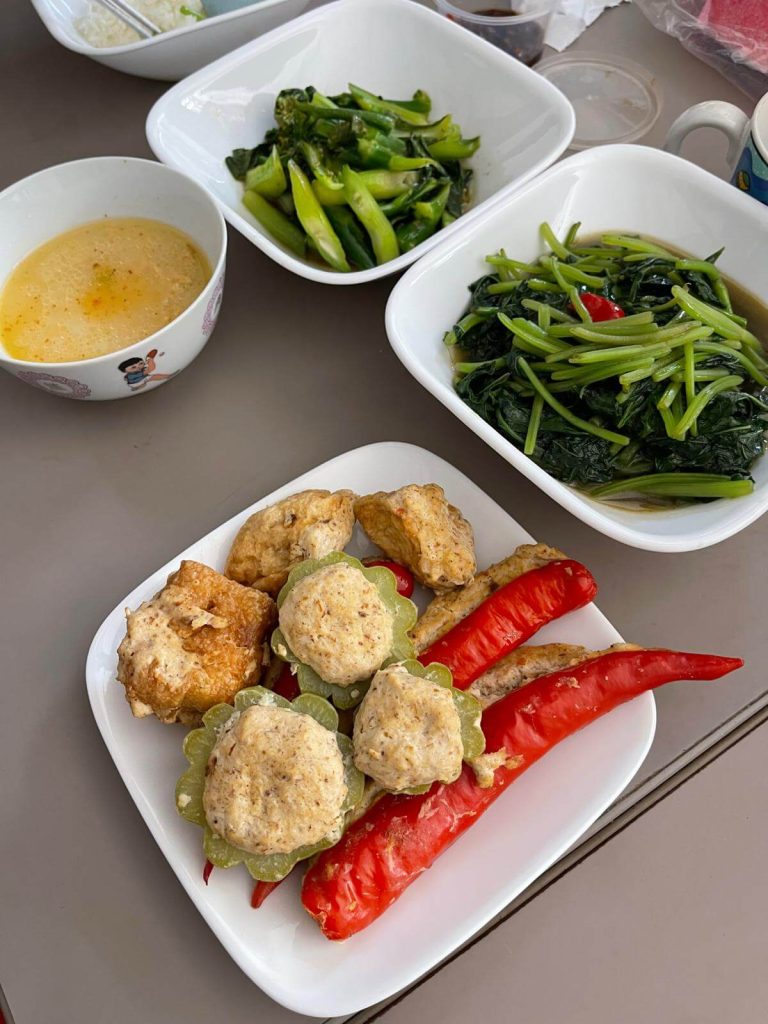
The daily meals of the zhaigu started off as relatively plain: rice, vegetables, tofu, and mianjin flavoured with soy and fermented bean paste. Over time, the women developed an elaborate repertoire of vegetarian dishes (sucai), including mock duck (suya), mock chicken (suji), and braised mushrooms. By expertly recreating the forms of meat from plants, the zhaigu and other Buddhist women also demonstrated that moral purity need not come at the expense of taste, thus easing the transition to a plant-based diet.
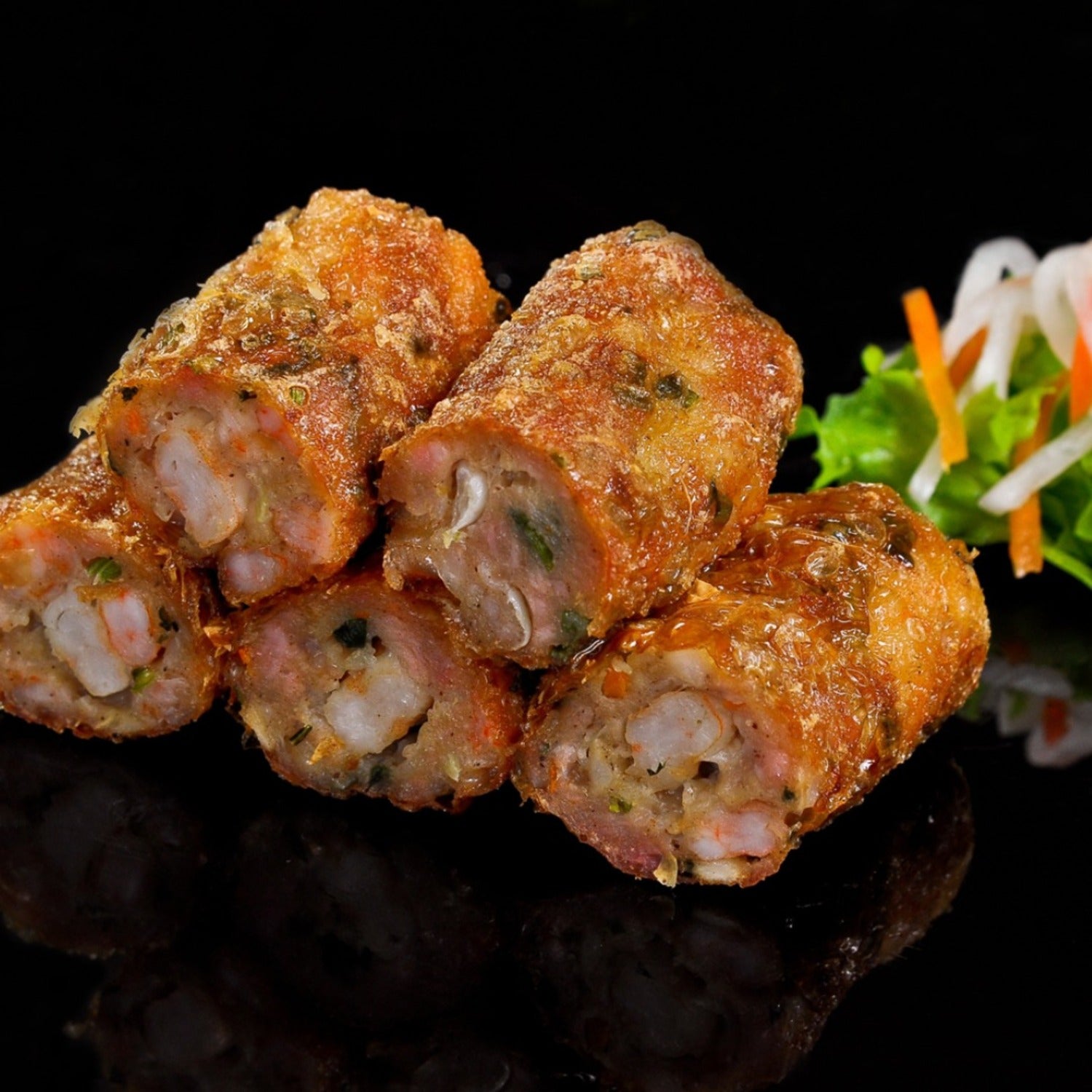
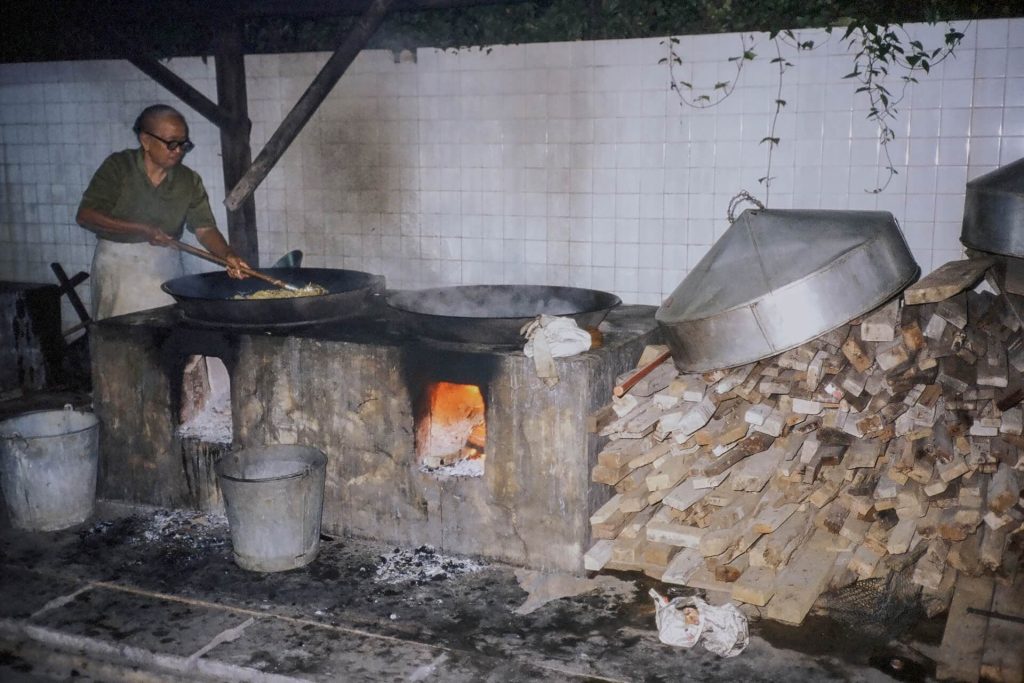
On the first and 15th days of every lunar month, when many Chinese traditionally abstain from meat, the halls would host vegetarian banquets for their lay supporters. For instance, residents at Guanyin Gong, a zhaitang in Cuff Road founded in 1954 by a Hakka woman, would rise at about 2am on key festival days to prepare mock meats and popiah (crepe-like roll filled with savoury ingredients) from scratch.9
In addition, during the annual Nine Emperor Gods Festival, devotees are required to observe a vegetarian diet for at least 10 days to maintain physical and spiritual purity. Local temples dedicated to the Nine Emperor Gods would also often provide free vegetarian meals to the public.
Vegetarian food for all
By the early 20th century, several zhaitang began selling vegetarian food to the public to fund their activities. Street vendors near temples offered rice and noodles prepared by zhaigu, or even vegetarian mooncakes during the Mid-Autumn period. Even more opportunities presented themselves in the postwar era. Loke Woh Yuen, founded in 1946 by zhaigu Lin Dajian (later ordained as Buddhist nun) and her lay Buddhist friends,10 enjoyed particular success. Their restaurant introduced banquet-style vegetarian food: vegetarian shark’s fin made from maize, fish fillet made from sugar cane flowers, “mixed meats” (loh mei) and mixed cold platters simulating oysters and other seafood.11
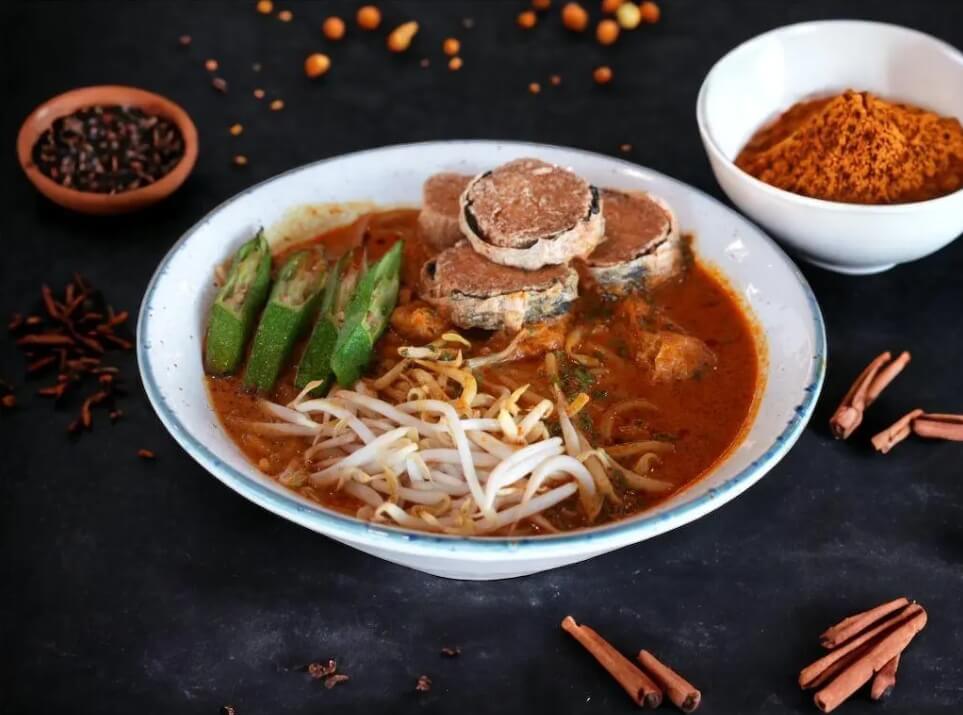
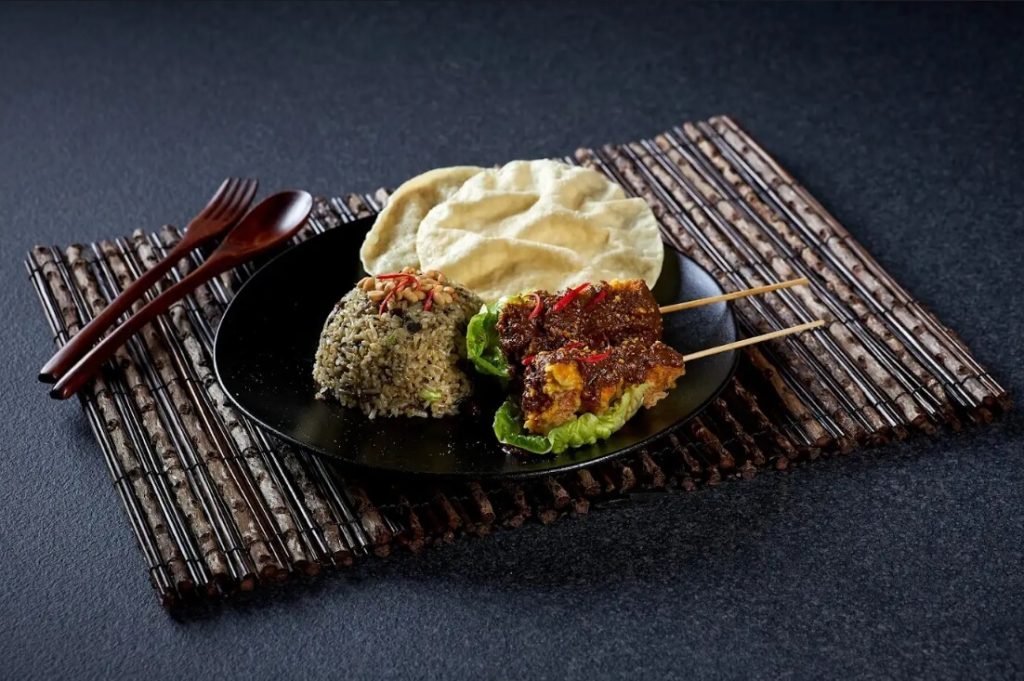
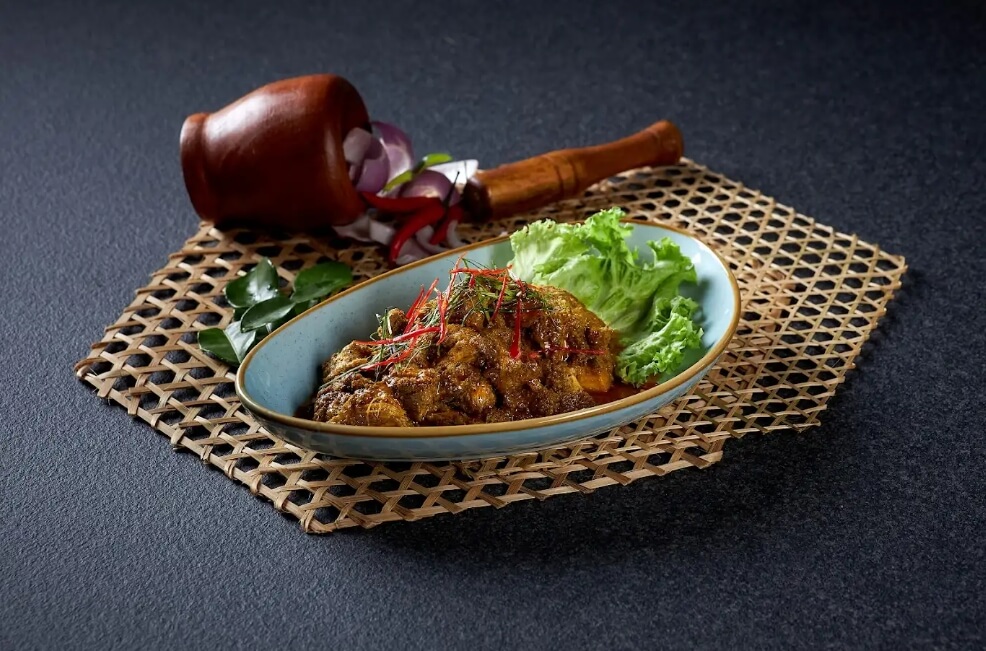
Fut Sai Kai was another one of the country’s most well-known Chinese vegetarian restaurants. While Loke Woh Yuen specialised in banquets, Fut Sai Kai, which was in business from 1953 to 2017, aimed at more price-conscious diners. Contemporary descriptions emphasised its unpretentious shophouse setting and three-cent dim sum plates. Importantly, Fut Sai Kai was one of the first Chinese vegetarian restaurants in Singapore to hire Cantonese chefs from Hong Kong, which shaped its repertoire of soups, mock roasts and dim sum. The restaurant drew a diverse clientele: Buddhists on the first and 15th of the lunar month, Christians who avoided meat on Fridays, and Hindus seeking vegetarian food after temple worship.12 One of Fut Sai Kai’s signature dishes was its Nanyang-style vegetable curry, marketed as “Pepper Blossom Offering” (jiaohua xiansong).13
After the 1950s, the government’s push for registration and the appeal of institutional legitimacy encouraged many of the surviving zhaitang to become members of the Singapore Buddhist Federation and align themselves with its affiliated temples. In 1953, “for the first time in Singapore a restaurant was set up in the premises of a religious institution”, the Buddhist Lodge in Kim Yam Road. It was run on a non-profit basis and served only vegetarian food.14
In the late 1970s, the Buddhist Lodge’s dining hall began three free vegetarian meals daily; by the 2010s, it was preparing around 800 portions on ordinary days and several thousand during festivals.15 Similarly, Bright Hill Temple (the largest Buddhist temple in Singapore) started offering free vegetarian meals to all on Vesak Day, featuring items such as “hot and sour sambal fish” made from beancurd and seaweed, “pandan leaf chicken” made from soya bean extract, and “vinegared pig trotters” made from gluten.16
Innovation and enterprise
As Singapore approached the turn of the century, Chinese vegetarian food continued to thrive. It properly made its mark on mainstream Singaporean cuisine with innovations like the yam ring in the 1950s. While working at his Dragon Phoenix restaurant, Cantonese chef Hooi Kok Wai reportedly created the yam ring for his girlfriend’s foster mother, who was vegetarian and celebrating a birthday. He enlarged the traditional Cantonese wugok (fried taro dumpling) and filled the ring with stir-fried vegetables, naming the dish “fragrant Buddha’s bowl” (fobo piaoxiang).17
An early contributor to Chinese vegetarian hawker fare was the second abbess of the temple Hai Inn See, a zhaigu named Yang Qincai (birth and death years unknown), who was well known for her vegetarian soon kueh (a type of Teochew steamed dumpling). In the 1950s, Yang discovered that bamboo plants grew well on the temple’s grounds, and since the main ingredient for the kueh was bamboo shoots, she led the effort to make it regularly. As the fame of her soon kueh spread, the temple was invited to sell it in a nearby coffee shop for five cents apiece. By 1988, it was estimated that there were some 160 hawker stalls selling Chinese vegetarian food.18 Around this time, restaurants such as Loke Woh Yuen and Fut Sai Kai expanded their menus to meet ever growing commercial demand.
A stone’s throw from the aforementioned Kwan Im Thong Hood Cho Temple is Fortune Centre. In the 1990s, it became a hub of Chinese vegetarian food, with an average of one new outlet opening there annually well into the 2000s. One of the first vegetarian restaurants at Fortune Centre sold Hakka thunder tea rice topped with chopped vegetables and “fried scrambled eggs” made with gluten.19 Other places elsewhere in Singapore, such as Lian Xin food court at the basement of the Buddha Tooth Relic Temple, have introduced mock Western dishes nonetheless made with Chinese vegetarian methods, ranging from Hawaiian pizza to “chicken” nuggets to “fish” fillets.
Still other restaurants have given traditional local dishes their own vegetarian twist, exploring more unusual meat substitutes such as konnyaku (a jelly-like extract from the konjac plant) and broiled capsicum. Numerous vegetarian products are also now commonplace in local supermarkets. At the same time, concerns have been raised about the low nutritional value of processed mock meats. This has led to the rise of vegetarian foods made with better sources of protein like Western broccoli and lion’s mane mushroom. One Indonesian company has collaborated with the Singapore Institute of Technology to better develop tempeh (fermented soya bean cake) for its “bakkwa” and other Chinese snacks.20
Disappearing traditions
Today, Chinese vegetarian food is no longer confined to lunar fasting days or festival meals. It is one of the everyday options in food courts and hawker centres, while some chain restaurants in shopping malls have made modern Chinese vegetarian meals widely available. But separate from the commercial success of Chinese vegetarian food is a worrying situation. Many of the religious institutions that pioneered such cooking are either closed or becoming obsolete, while the labour-intensive techniques used to prepare certain dishes risk being lost as practitioners age without successors. For example, the recipes of the zhaigu were rarely documented, passed instead through apprenticeship and repeated cooking.21
As Singapore’s vegetarian food scene continues expanding, driven by health trends and environmental concerns, the philosophical and spiritual origins that made it possible risk becoming mere historical footnotes. Aside from preserving recipes, the real challenge ahead is understanding that Chinese vegetarian food was never just about ingredients and techniques — it was about how people chose to live according to their ethical and metaphysical beliefs. Whether that deeper significance can survive the translation from temple to table remains to be seen.
| 1 | However, monastics in early Indian Buddhism mostly accepted whatever food was given to them as alms, and mandatory vegetarianism in the clergy remains a feature unique to East Asian Buddhism, excluding Japan. See Erik M. Greene, “A reassessment of the early history of Chinese Buddhist vegetarianism,” Asia Major 29, no. 1 (2016), 1. |
| 2 | Interview with Venerable Shi You Guang, Abbot/President of Samantabhadra Vihara and Chairman (Public Relations) of the Singapore Buddhist Federation, 31 December 2025. |
| 3 | However, the extent to which Chinese Buddhist clergy ate meat prior to Emperor Wu’s mandating of vegetarianism for them is a contentious topic. |
| 4 | In Chinese Buddhist monasteries, the term “zhaitang” refers to the dining hall where monks and nuns take their meals, also known as the Wuguantang (“Hall of Five Contemplations”). Here, however, “zhaitang” refers instead to a distinctive religious space inhabited by lay vegetarian devotees, including both men (zhaigong) and women (zhaigu). |
| 5 | Marjorie Topley, “Chinese women’s vegetarian houses in Singapore,” Journal of the Malayan Branch of the Royal Asiatic Society 27, no. 1 (1954), 51–67. |
| 6 | Author’s interview with Venerable Shi You Guang, 31 December 2025. |
| 7 | Lok Miao Teng, “Jushi Lin a gu wusi fengxian shushi zai” [The “aunts” of the Buddhist Lodge: decades of selfless service], Lianhe Zaobao, 16 December 2019. |
| 8 | Author’s interview with Venerable Shi You Guang, 31 December 2025. |
| 9 | Melody Zaccheus, “Hidden women’s abodes,” The Sunday Times, 14 April 2019. |
| 10 | Lin Ruo, “Buddhist Women and Female Buddhist Education in the South China Sea: A History of the Singapore Girls’ Buddhist Institute,” Religions 14, no. 3 (2023): Article 392, 13. |
| 11 | Kelvin Tan, “How Chinese Buddhist women shaped the food landscape in Singapore,” BiblioAsia 18, no. 2, July–September 2022. |
| 12 | Shan Hua, “You yi jiankang sushi jian zai woguo liuxing” [Healthful vegetarian food is increasingly popular in Singapore], Shin Min Daily News, 11 August 1980. |
| 13 | Chinese immigrants from Fujian and Guangdong also formed overseas Chinese communities in Indonesia very early on, and Chinese vegetarian dishes gradually integrated into Indonesian food culture. They added rice cakes and curry soup to vegetarian dishes, creating the Indonesian specialty “Lontong Chap Goh Mei” (15th Lunar Day Mixed Vegetable Soup). When this dish spread to Malaysia and Singapore, the Malays adapted it according to their dietary customs. They used cabbage, long beans, and carrots as ingredients, adding onions, curry leaves, and coconut milk to stew them into a curry-based vegetable dish. Fut Sai Kai’s founder incorporated popular Chinese vegetarian ingredients like gluten puffs and mock chicken into her restaurant’s vegetable curry. When the second generation took over in the 1970s, the restaurant offered this dish every Sunday. Liew You Choo, “Cong Nanyang zhaicai dao gali zacai” [From Nanyang vegetarian dishes to vegetable curry], Lianhe Zaobao, 20 May 2007. |
| 14 | “A Buddhist restaurant,” The Straits Times, 24 August 1953. |
| 15 | Lok Miao Teng, “Jushi Lin a gu wusi fengxian shushi zai” [The ‘aunts’ of the Buddhist Lodge: decades of selfless service], Lianhe Zaobao, 16 December 2019. |
| 16 | Magdalene Lum, “No meat please, we’re Buddhists,” The Straits Times, 10 May 1998. |
| 17 | “Chuangxin jiayao shou yejia qinglai” [His inventive dishes earned him the culinary world’s praise], Lianhe Zaobao, 7 August 2016. At the suggestion of his fellow chefs, shredded chicken was eventually added to the dish. |
| 18 | May Ho, “Cuttlefish to mock the meat-eater,” The Straits Times, 28 August 1988. |
| 19 | Melissa Lin, “Veggie tables,” The Straits Times, 19 April 2013; Adira Chow, “New Green Pasture Cafe,” TimeOut, 9 April 2025. |
| 20 | Tan Hsueh Yun, “Tempeh time: Centuries-old source of protein in the spotlight,” The Straits Times, 6 November 2021. |
| 21 | Author’s interview with Krisada Virabhak, 3 December 2025. |
Broy, Nikolas. “Moral Integration or Social Segregation? Vegetarianism and Vegetarian Religious Communities in Chinese Religious Life.” In Concepts and Methods for the Study of Chinese Religions (Volume III: Key Concepts in Practice), edited by Paul R. Katz and Stefania Travagnin, 37–64. Berlin: De Gruyter, 2019. | |
Greene, Erik M. “A Reassessment of the Early History of Chinese Buddhist Vegetarianism.” Asia Major 29, no. 1 (2016): 1–43. | |
Jing, Jing. “Yunqi Zhuhong’s Thought on Abstaining from Killing and Releasing Life and the Buddhist-Christian Debate in the Late Ming Dynasty.” Religions 16, no. 11 (2025): Article 1332. | |
Lin, Ruo. “Buddhist Women and Female Buddhist Education in the South China Sea: A History of the Singapore Girls’ Buddhist Institute.” Religions 14, no. 3 (2023): Article 392. | |
Liew, You Choo. “Cong Nanyang zhaicai dao gali zacai” [From Nanyang vegetarian dishes to vegetable curry]. Lianhe Zaobao, 20 May 2007. | |
Lok, Miao Teng. “Jushi Lin a gu wusi fengxian shushi zai” [The “aunts” of the Buddhist Lodge: Decades of selfless service]. Lianhe Zaobao, 16 December 2019. | |
Shan, Hua. “You yi jiankang sushi jian zai woguo liuxing” [Healthful vegetarian food is increasingly popular in Singapore]. Shin Min Daily News, 11 August 1980. | |
Show, Ying Ruo. “Chinese Buddhist vegetarian halls (zhaitang) in Southeast Asia: Their origins and historical implications.” ISEAS NSC Working Paper No. 28 (2018). | |
Show, Ying Ruo. “Shicheng shan nüren — 19 shiji yilai de Xinjiapo zhaigu shequn” [The Lion City’s virtuous women: The vegetarian sisterhoods of Singapore since the 19th century]. Research on Women in Modern Chinese History 35, (2020): 121–183. | |
Shurtleff, William; Aoyagi, Akiko. History of Vegetarianism and Veganism Worldwide (1970–2022). California: Soyinfo Center, 2022. | |
Tan, Kelvin. “How Chinese Buddhist Women Shaped the Food Landscape in Singapore.” BiblioAsia 18, no. 2, July–September 2022. | |
Topley, Marjorie. “Chinese Women’s Vegetarian Houses in Singapore.” Journal of the Malayan Branch of the Royal Asiatic Society 27, no. 1 (1954): 51–67. | |
Tseng, Ampere A. “Five Influential Factors for Chinese Buddhists’ Vegetarianism.” Worldviews 22, no. 2 (2018): 143–162. | |
Zaccheus, Melody. “Hidden women’s abodes.” The Sunday Times, 14 April 2019. |