Nam Hwa Opera


From the late 1950s to the early 1960s, Teochew opera films from Chaoshan, China — such as So Luk Neung, The Burning of the Riverside Tower, and Chen San and Wu Niang — were a hit in Singapore, sparking widespread interest in Teochew opera. Many were inspired to participate in the creation and performance of Teochew opera. In response, the Huang Clan Chichang Association, one of the 10 Huang clan associations in Singapore at the time, set up a joint drama research group in March 1962 to promote traditional Chinese arts.
To attract members of different dialect groups and surname clans, the Huang Clan Chichang Association officially formed the Nam Hwa Amateur Musical & Dramatic Association (南华儒剧社) in November 1963. The Chinese characters “南华” (nan hua), meaning “Nanyang Chinese”, reflected this inclusive outlook, while “儒” (ru) connoted a sense of elegance. Its first president was Huang Hanyang (birth and death years unknown), who was in charge of the general affairs sections at both the Huang Clan Chichang Association and the joint drama research group.
When it was first set up, Nam Hwa Amateur Musical & Dramatic Association received a donation of $1,500 from clan association Huang Shi Zong Hui (Singapore) and attracted a group of like-minded amateur Teochew opera enthusiasts. In 1964, Nam Hwa staged a public performance of Chen San and Wu Niang, where the stage design and props were modelled after the eponymous Teochew opera film, reflecting the amateur troupe’s rigorous dedication to the art of traditional Chinese opera. The following year, Nam Hwa held charity performances to raise funds for various organisations.
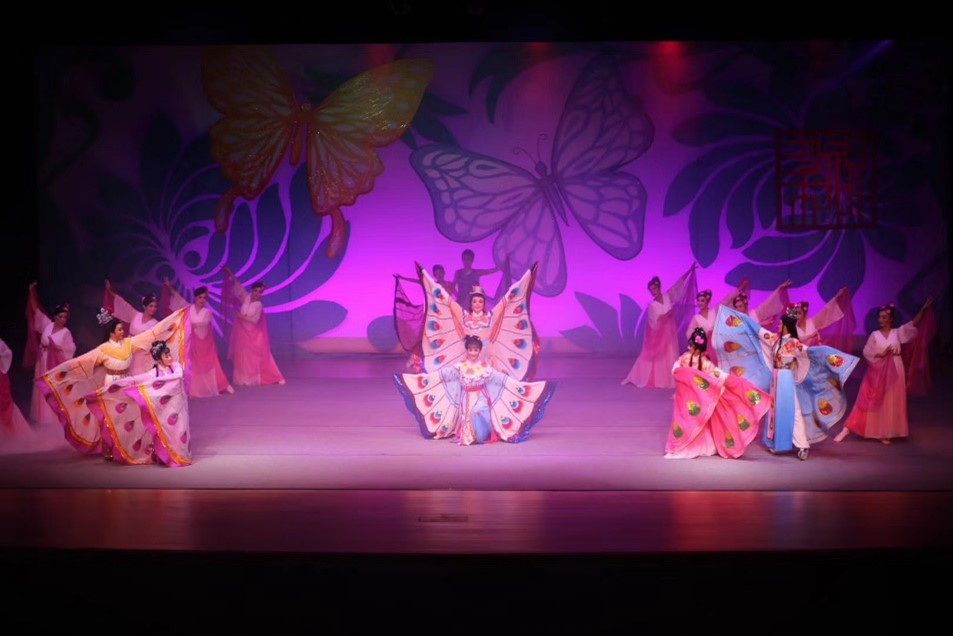
At the same time, Nam Hwa gradually made its way to television, participating in the filming of televised Teochew operas on numerous occasions. Its works include The Trial of Qing Eng (1965), Love Proposal through Drama (1966), The Meeting at Nanshan (1968), Lord Bao Thrice Investigates the Butterfly Dream (1971), A Drizzling Rain (1972), and Gift of a Sword from Princess Baihua (1978).
During the same period, Nam Hwa faced challenges such as a shortage of instructors and limited facilities, and had to rely largely on imitation and self-learning during rehearsals. For instance, He Fuxian, one of Nam Hwa’s founders, developed her own staging ideas for Chen San and Wu Niang and The Trial of Qing Eng by watching films and listening to recordings.
Passing on the art of Teochew opera
From the late 1970s to the early 21st century, Nam Hwa actively promoted Teochew opera through various platforms and channels. It participated in a series of government-organised traditional Chinese opera showcases, presenting plays including Gift of a Sword from Princess Baihua (1978), Zhao Shao Qing (1978), Qi Mei Bao Qin Chou (1978), Luo Jia Jiang (1982), Swopping the Bride (1983), Pang Diao Hua (1983), Chenxiang’s Escape (1983), Lord Bao Thrice Investigates the Butterfly Dream (1983), Yu Qian Mai An (1987), and Qiong Jiang Yu Lu (1992).
It also staged performances for the community, such as The Phoenix Crown in 1988 to raise funds for the expansion of Boon Teck Community Centre. Subsequently, it performed at community clubs in Hougang, Punggol, Chong Pang, Eunos, Pasir Ris South, and Ang Mo Kio.1
In that period, Nam Hwa also engaged in exchanges with overseas Chinese opera communities. In 1984, it invited drama expert Chen Jiabao from Fujian to direct Zhu Zhishan Marrying Off His Daughter, staged in celebration of the association’s 21st anniversary. In 1986, Nam Hwa invited Wu Dianxiang, director of Guangdong Chao Opera Theatre in China, to direct some of its productions, sparking a collaborative relationship that lasted for more than two decades. Through these exchanges, Nam Hwa achieved breakthroughs in its script development, stage design, makeup, and performance techniques. It also worked with a number of overseas Chinese opera experts on the creation and staging of its productions.
Under the leadership of then-president Zheng Yangming (who served from 1986 to 1998), Nam Hwa began receiving invitations to perform overseas. In 1993, the troupe travelled to Shantou, China to present its 29th anniversary celebratory production Qiong Jiang Yu Lu at the inaugural International Teochew Opera Festival. Nam Hwa also invited several overseas groups to perform in Singapore, including Shantou Cultural & Art School’s youth Teochew opera troupe in 1994, Chaozhou’s Teochew Opera Troupe in 1997 and 2001, and troupes of other opera genres, such as Xiaobaihua Yue Opera Troupe of Shaoxing in 2002 and 2011.
From the late 1990s to the early 21st century, Nam Hwa held many Teochew opera karaoke classes and large-scale Teochew opera karaoke concerts, including Xiang Yin Xiang Qing (2000), Nam Hwa 40 (2003), Chao Qing Chao Yi (2009), and Chao Yun Chuan Qing (2012). It also adopted innovative approaches in several large-scale productions. For instance, it collaborated with Singapore Chinese Orchestra in 2000 for the production Xishi Returns to the Yue Kingdom, starring Li Shiyao, Chua Ai Peck, and Heng Hun Eng. Meanwhile, its 2006 performance of Loyalty and Integrity featured a revolving stage and dance elements. In 2008, it performed A Mother’s Woes at the Esplanade for the first time, and in 2010, it collaborated with the Singapore Armed Forces Music and Drama Company’s Chinese orchestra to present Yin and Yang Ridge.
Transformation and innovation
In 2013, Nam Hwa faced the possibility of closure due to funding shortages. Fortunately, with support from Toh Lim Mok (who later became president of Nam Hwa in 2015) and assistance from various parties, Nam Hwa managed to pull through. That same year, Nam Hwa spent S$300,000 to stage Dream of Xiao Zhuang in celebration of its 50th anniversary.
In 2015, Nam Hwa was registered as a private limited company and secured development funding through fundraising as well as grants from the National Arts Council. This move marked the transformation of Nam Hwa from an amateur Chinese opera group to a professional organisation, allowing it to promote Teochew opera to a wider audience. That year, Nam Hwa also restaged The Family of Three Scholars, which it first performed in 1970, as a tribute to Singapore’s 50th year of independence. The following year, Nam Hwa received the Outstanding Organisation Award at the Singapore Chinese Opera Orchid Awards, while its youngest member at the time, Tan Wei Tian, was conferred the New Talent Award.
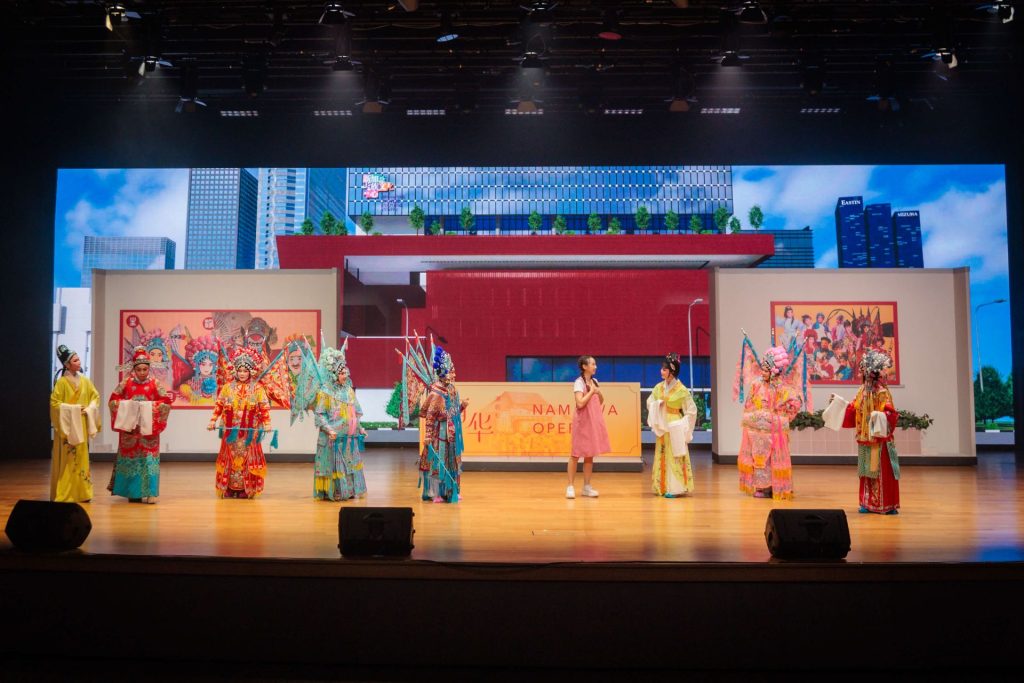
Following its transition to a private limited company, Nam Hwa actively expanded its channels for promoting Teochew opera. Apart from collaborating with local Teochew associations, Nam Hwa also supported the Teochew Festival organised by Teochew Poit Ip Huay Kuan in 2016, held academic lectures on Chinese opera, offered Teochew opera courses for children, and worked with schools to promote traditional Chinese opera. To give its students more opportunities to perform, it increased its regular performances of opera excerpts in its production Nam Hwa Blaze.
Nan Hwa was also invited to participate in Chinese opera showcases in Zhejiang, Guangxi, Guizhou, Henan in China, as well as South Korea, Cambodia, and Germany. As part of its efforts to go professional, Nam Hwa established Nam Hwa Music Ensemble in 2017 and hired professional instructors, including renowned Teochew opera artiste Lee Mooi Ching and teachers from China, to conduct classes. It also arranged for its students and musicians to further their training in Chaoshan, China.
In 2018, the company officially changed its name to Nam Hwa Opera, and updated its website and logo to reflect its evolution. In 2019, Nam Hwa Opera established the Yeo Khee Lim Teochew Culture Research Centre, Singapore’s first research centre on Teochew culture. In 2020, Nam Hwa Opera received the inaugural Stewards of Intangible Cultural Heritage Award by the National Heritage Board. More recently, in 2023, it was honoured with the Singapore Chinese Cultural Contribution Award (Organisational) in recognition of its outstanding contributions to the transmission and preservation of Chinese culture in Singapore.
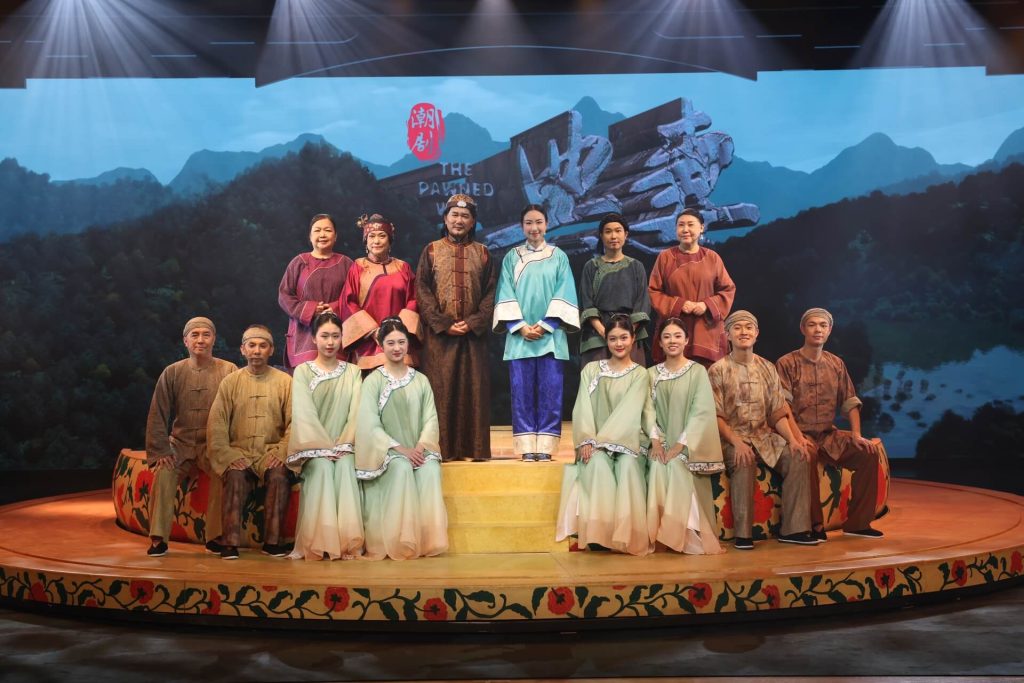
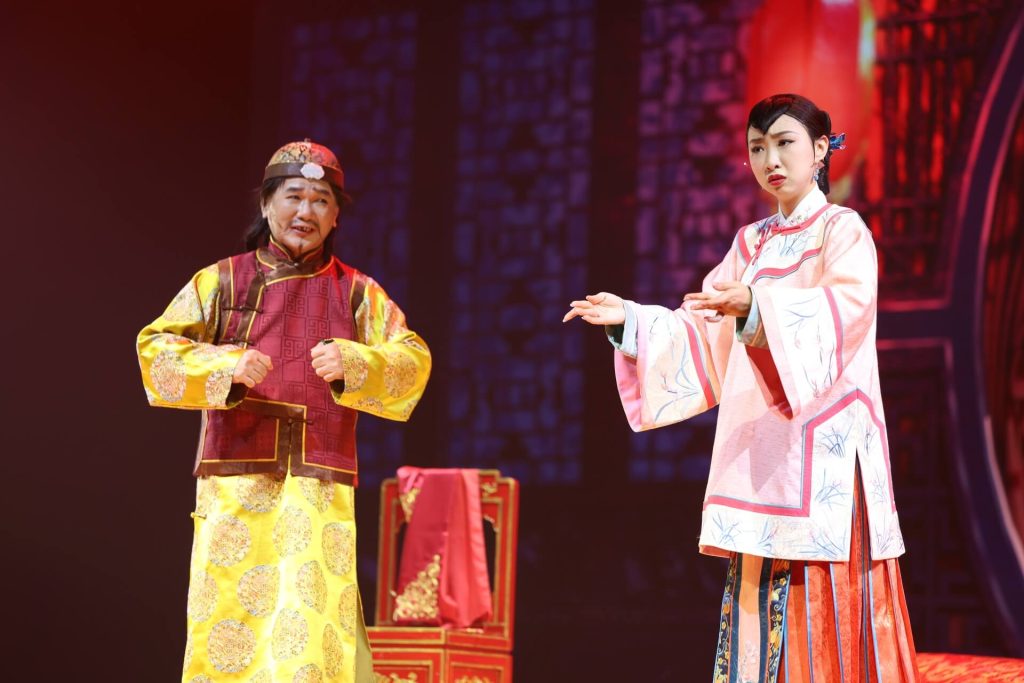
During the COVID-19 pandemic, Nam Hwa Opera Troupe took to social media to share performance clips, behind-the-scenes footage, and insights into Teochew opera to engage younger audiences and encourage them to explore and participate in the art form. Post-pandemic, Nam Hwa Opera resumed staging annual productions, including Lin Da Qin (2022), The White Rabbit (2023), and The Pawned Wife (2024).
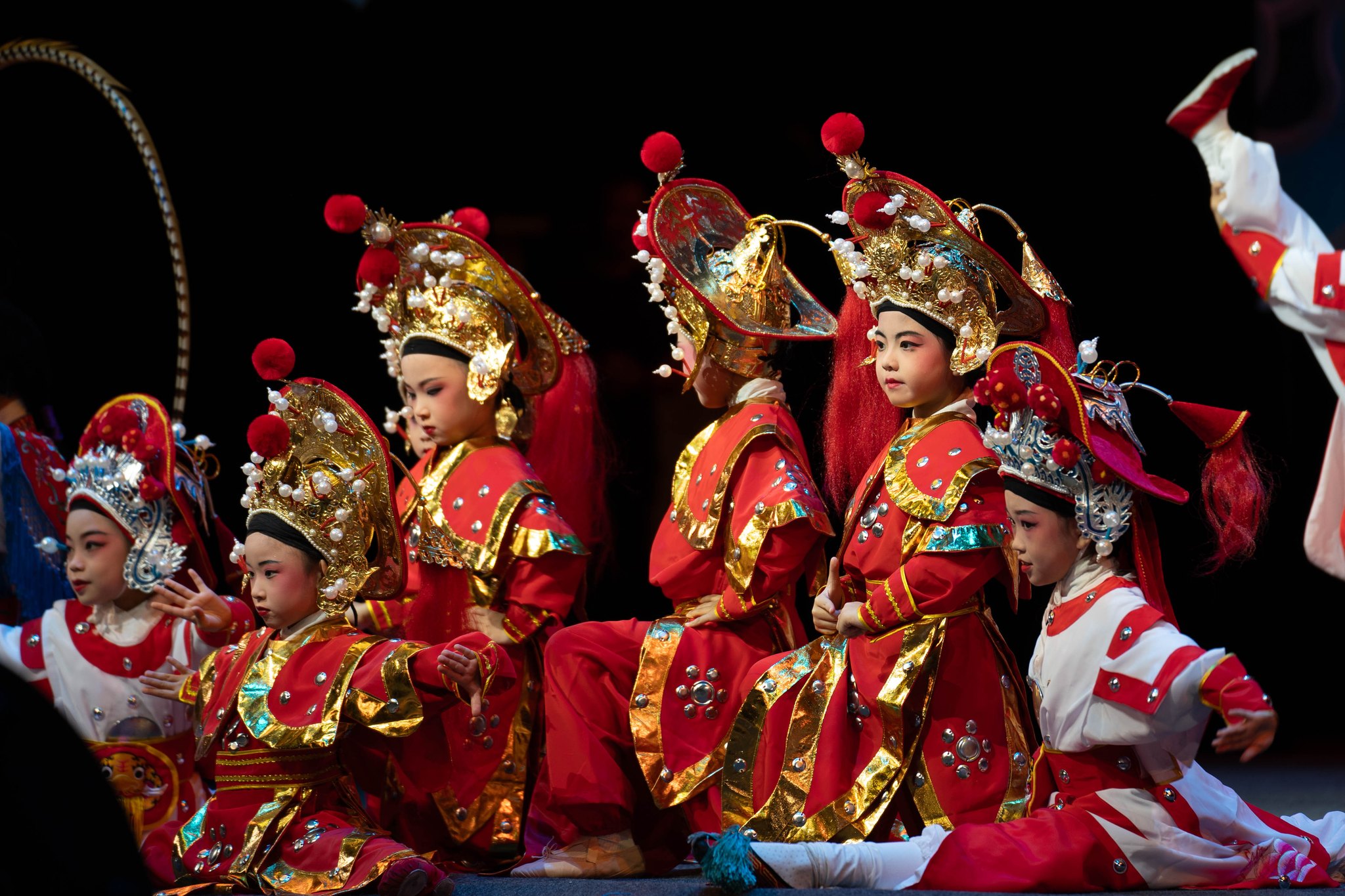
Today, Nam Hwa Opera is one of Singapore’s most active Teochew opera troupes. It remains committed to nurturing the younger generation’s interest in Teochew opera by regularly organising holiday cultural camps and launching a children’s Chinese opera showcase, The Legacy in Me. In 2025, the company introduced the Nam Hwa Opera mobile application to further attract young audiences, while promoting local Chinese traditional opera and Teochew culture.
This is an edited and translated version of 南华潮剧社. Click here to read original piece.
| 1 | Community centres serve as venues for residents to participate in various activities and are usually located in HDB estates. In recent years, many renovated community centres have been renamed community clubs, though some have retained their original names. |
Nam Hwa Opera. Chaoliu yixing, gudong xinsheng: nanhua chaojushe 56 nian qingdian ji nanhua chaoyuetuan sanzhounian qingdian tekan [Commemorative booklet for the 56th anniversary of the Nam Hwa Opera and the 3rd anniversary of the Nam Hwa Teochew Music Ensemble]. Singapore: Nam Hwa Opera, 2019. | |
Nam Hwa Opera. Nanguang zhumeng, huali zhuanshen: cong zhuanxing dao yiming, 2015–2018 [Nam Hwa: pursuing dreams, embracing change, 2015–2018]. Singapore: Nam Hwa Opera, 2018. | |
Nam Hwa Opera. Years 1963–2013: Nam Hwa Opera Celebrating 50th Anniversary. Singapore: Nam Hwa Opera, 2013. | |
Oral history interview with members of Nam Hwa Opera. National Archives of Singapore. | |
“Nam Hwa Opera: Tradition, Professionalism and Cultural Transmission.” Roots, National Heritage Board. | |
The Singapore Chinese Opera Institute. Chaoju baohu fazhan yu chuanbo [Teochew opera: preservation and growth]. Singapore: The Singapore Chinese Opera Institute, 2012. | |
Su, Zhangkai. Imprints in Time: The History of Teochew Opera in Singapore. Singapore: Nam Hwa Opera, 2019. | |
Su, Zhangkai. Pictorial History of Teochew Opera in Singapore. Singapore: Nam Hwa Amateur Musical & Dramatic Association Limited, 2016. | |
Yi, Yan. Liyuan shiji: Xinjiapo huazu difang xiqu zhi lu [Hundred years development of Chinese opera in Singapore]. Singapore: The Singapore Chinese Opera Institute, 2015. |