Hokkien food in Singapore


The Hokkiens, Singapore’s largest Chinese dialect group, hail from the hilly coastal province of Fujian in China. While “Hokkien” technically refers to the entirety of Fujian — a vast region that is also home to the Henghua, Hockchew and Minbei people — the term is generally used in Singapore to refer specifically to people from southern Fujian (Minnan) prefectures such as Quanzhou and Zhangzhou. All references to “Hokkien” in this article will therefore be to this subset of Fujian people.
The bulk of Singapore’s Hokkien immigrants arrived in the late 19th century and early 20th century, fleeing social unrest and poverty in China. Many of them settled in the Singapore River and Telok Ayer areas, and carved out niches in industries such as trade, finance, shipping, and construction. They also brought with them their food — leaving an undeniable imprint on Singapore food culture with popular fare such as Hokkien mee, popiah (a crepe-like roll containing savoury ingredients), and bak kwa (“dried meat”). And yet, despite the dominance of the Hokkiens in Singapore, there are only a few traditional Hokkien restaurants on the island. The cuisine has long been perceived as “homely”, particularly in contrast to elaborate Cantonese cuisine. As the saying suggests: Fujian cai wei da pan cai, shang bu liao tingtang (“Hokkien food is usually served as a platter and not fit for grand halls”).
Flavourful and fragrant
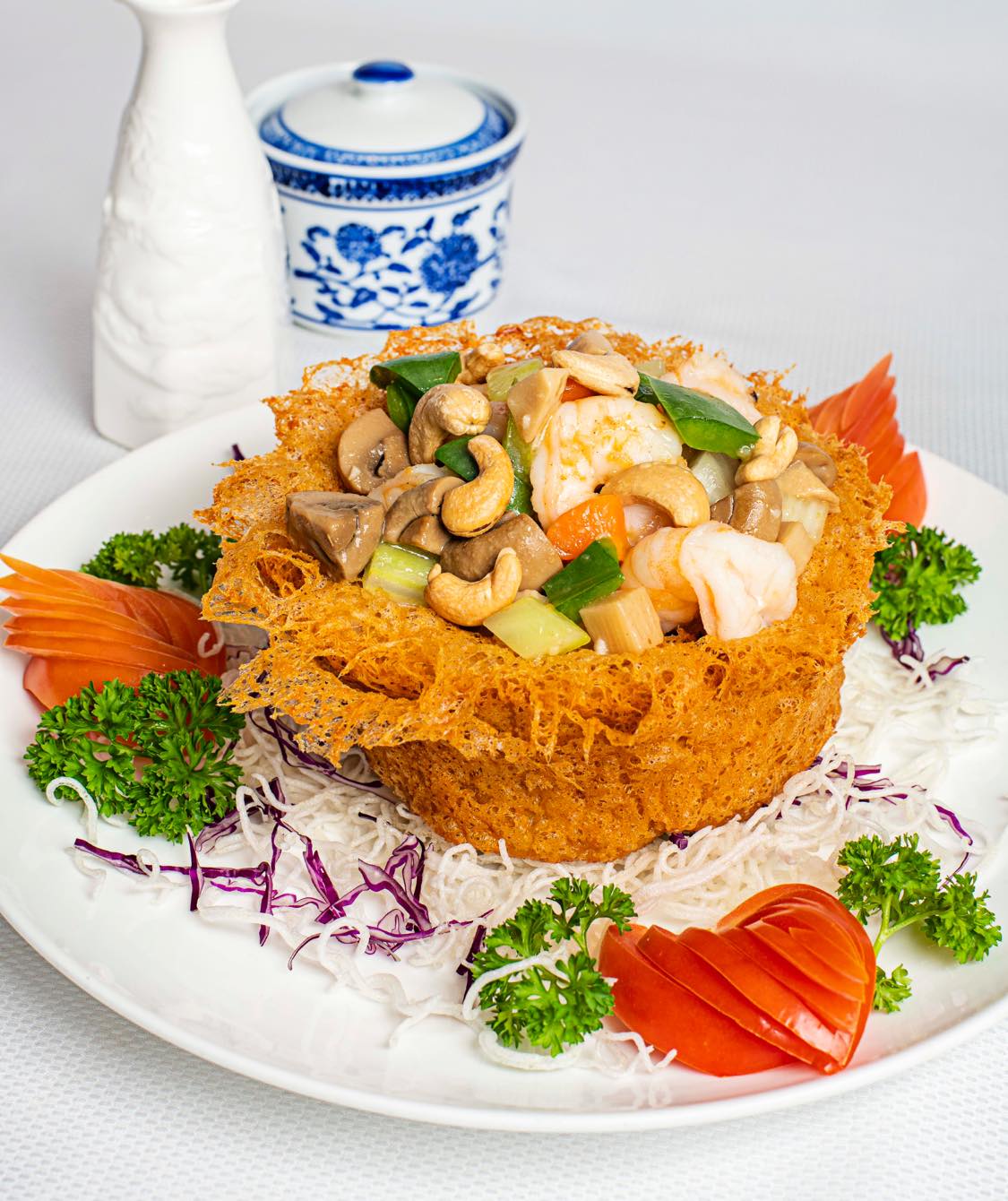
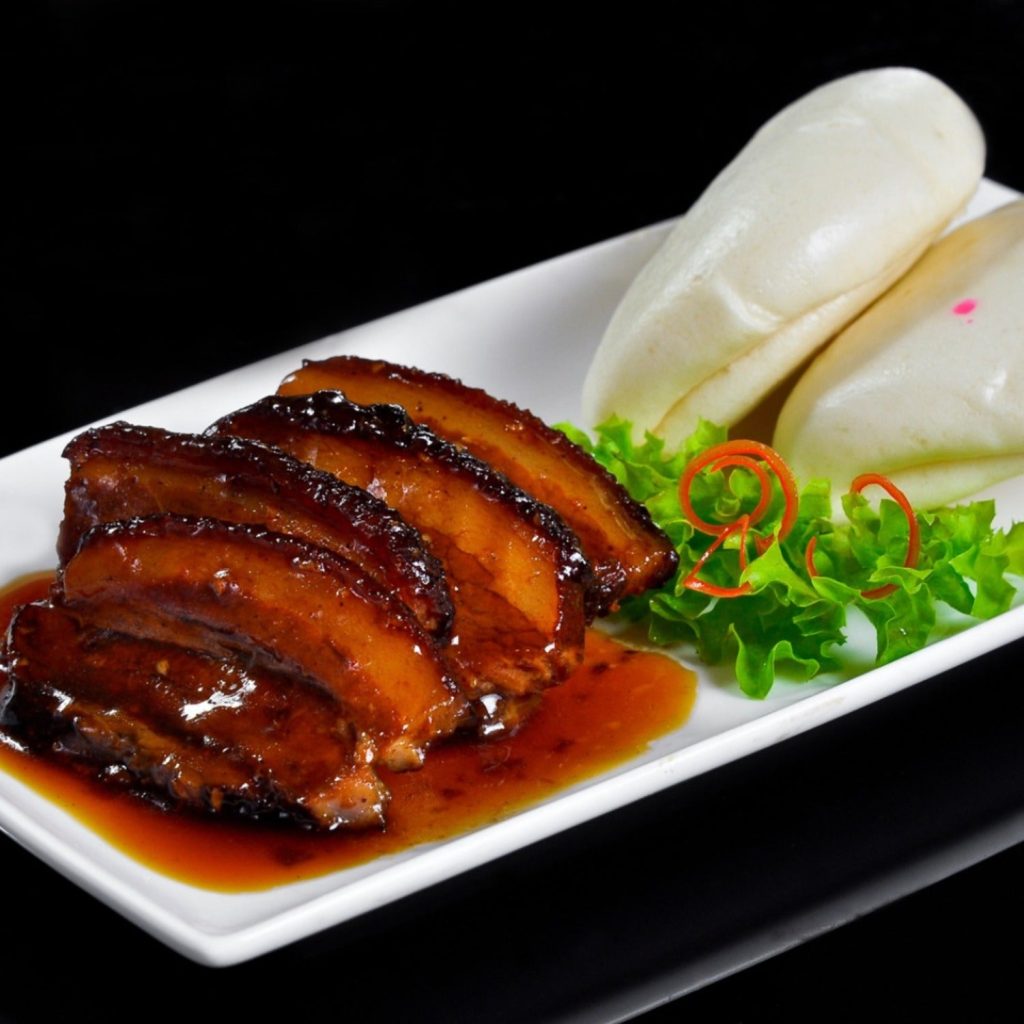
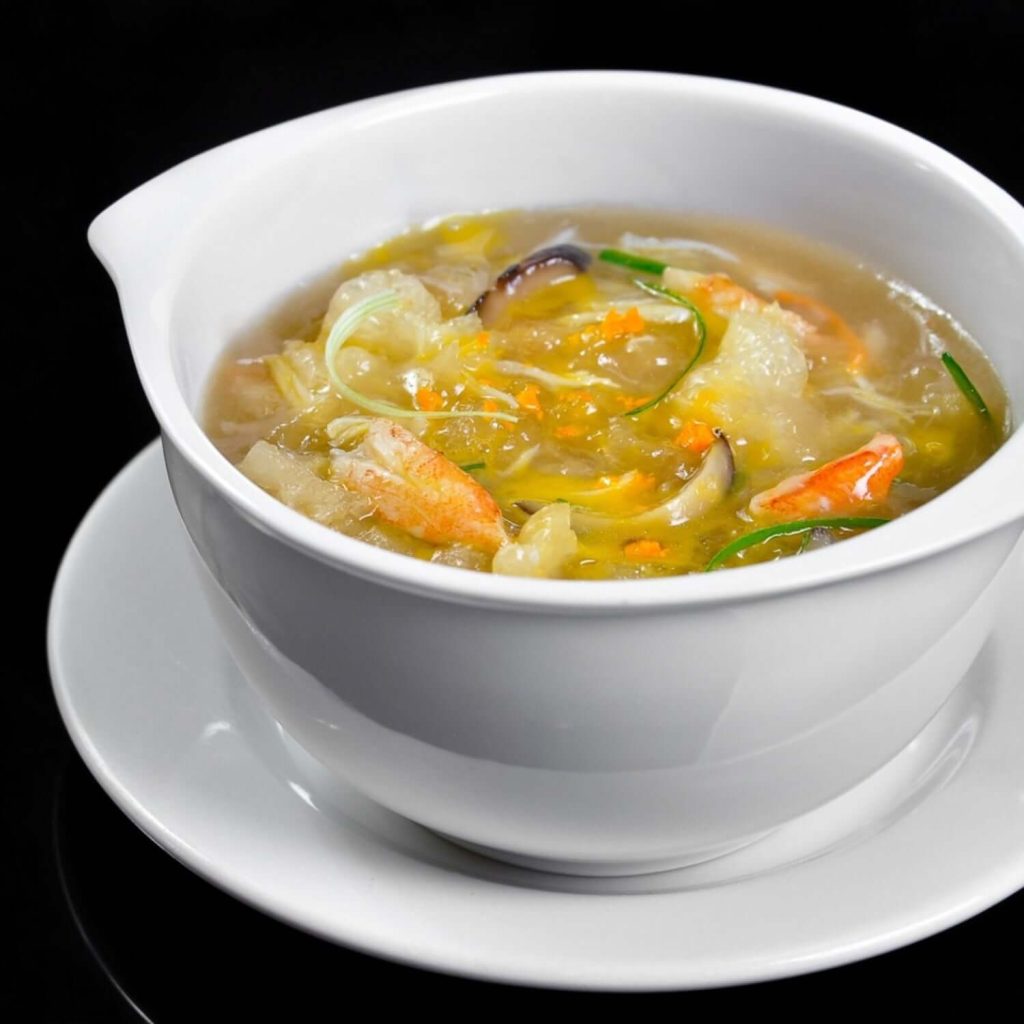
Given Fujian’s proximity to the sea, it is unsurprising that seafood features strongly in Singapore Hokkien cuisine: fried Hokkien prawn mee (char hae mee), prawn noodle soup (hae mee), deep-fried prawn rolls, oyster omelette (orh jian), fish maw soup, and braised duck with sea cucumber. Pork, a common livestock animal in Fujian, also exerts a strong presence in kong bak pau (braised pork belly in white bun), bak kwa, and bak kut teh (herbal pork soup). 1
Another defining feature of local Hokkien cuisine is a preference for smooth textures. This is typically achieved through a process known as velveting, where food is coated in slurry and then fried, boiled or steamed to impart it with a smooth, silken texture. Examples include braised tofu, traditional Hokkien mee, and fish maw soup (a gelatinous broth resembling shark’s fin soup). The cuisine is also known for its heavy use of soy sauce — particularly for braising meats and noodles — as well as its artful use of sugar and vinegar to balance fishy or pungent flavours and accentuate the aroma of seafood.
Two distinct Hokkien dishes in Singapore are in fact more commonly found in Malaysia today, having been supplanted in Singapore by other versions of the same dish. They are traditional Hokkien mee and bak kut teh.
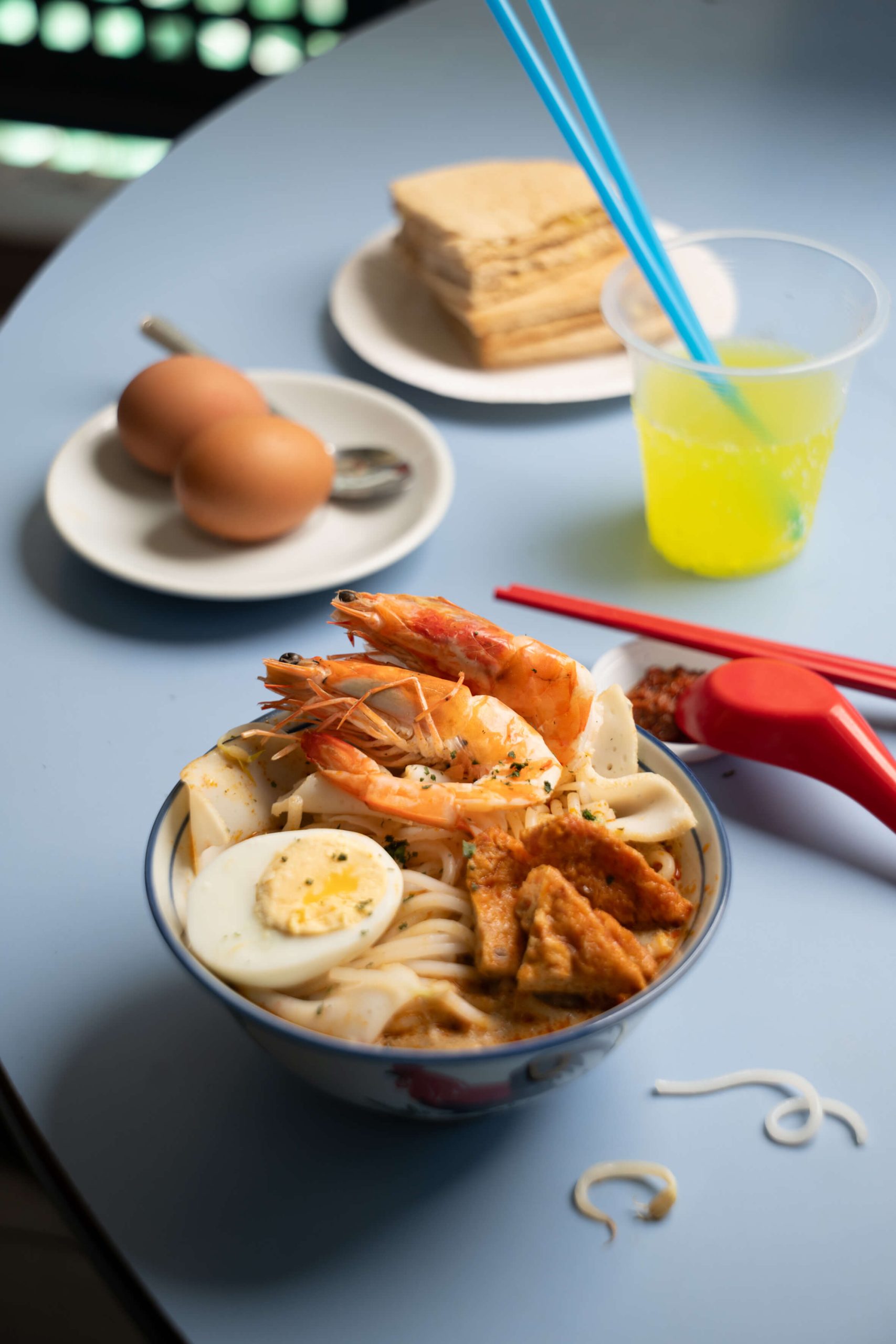
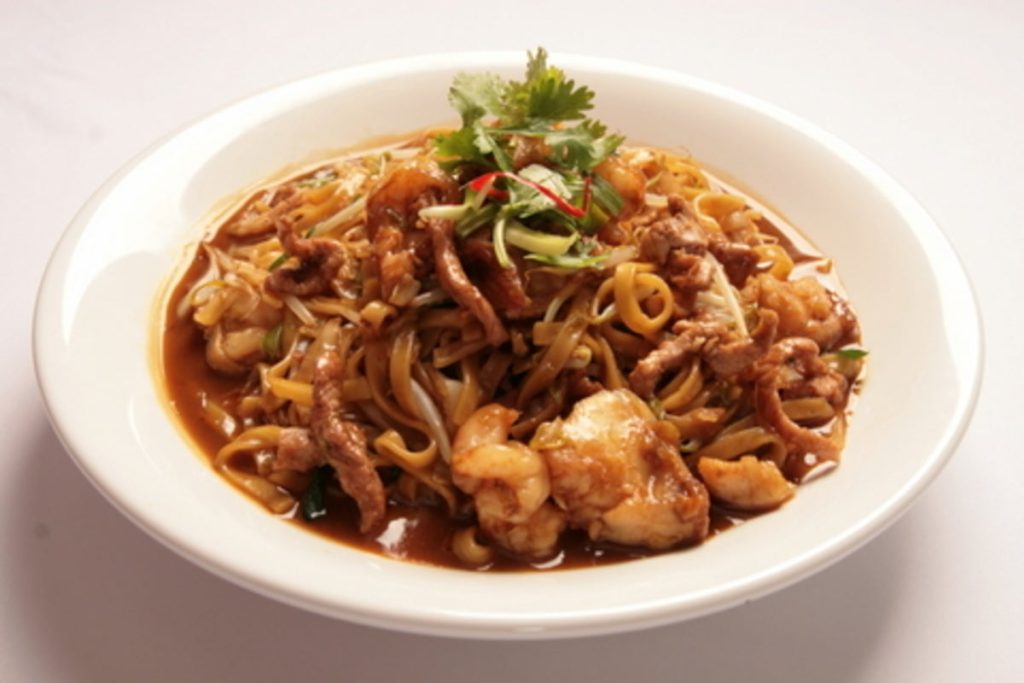
Today, most Singaporeans associate “Hokkien mee” with fried Hokkien prawn mee — a popular hawker dish consisting of wok-fried yellow noodles and rice vermicelli fried with a pork and seafood broth, containing prawns, squid, pork belly, bean sprouts, and a drizzle of lime and spoonful of sambal chilli. This version of Hokkien mee, which came into being after World War II, bears the strong influence of Peranakan cooking.2 The Hokkien mee cooked by the country’s early Hokkien immigrants was markedly different: consisting of flat handmade alkaline noodles that were fried and then braised in a rich broth made from such ingredients as fish, pork, prawns, clams, squid, oyster, flounder, chye sim, pork innards, and prawn rolls. The dark-coloured noodle dish, which is known for its heavy use of soy sauce and its smooth, starchy texture, is more commonly known today as “Kuala Lumpur Hokkien mee”. It is now less well-known in Singapore, although it can still be found in old Hokkien restaurants and zichar stalls. However, some original ingredients for the broth — such as pork innards and prawn rolls — are no longer commonly used.
Hokkien bak kut teh, which has existed on the island since at least the early 20th century, consists of a dark-coloured herbal broth cooked with pork meat. Unlike the lighter, peppery Teochew version that dominates in Singapore today, it is notable for its heavy use of soy sauce, herbs and spices such as dang gui (female ginseng), Solomon’s seal, cinnamon, clove, and different parts of the pig such as the belly and knuckle, not just spare ribs.3 To balance the fatty and “heaty” nature of the soup in tropical Singapore, it was often served with a cup of Chinese tea in the early days.4 Today, Hokkien bak kut teh is more commonly found in the Malaysian city of Klang.
Of feasts and festivals
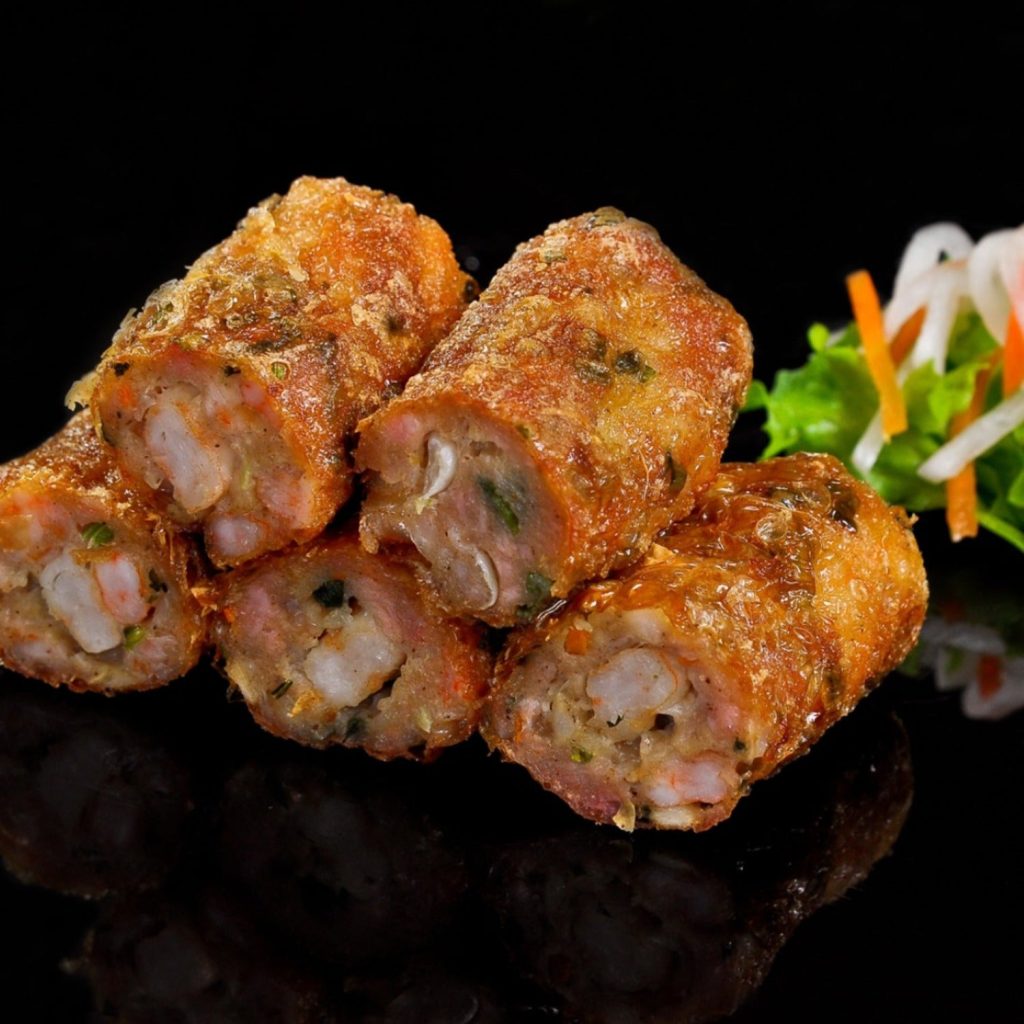
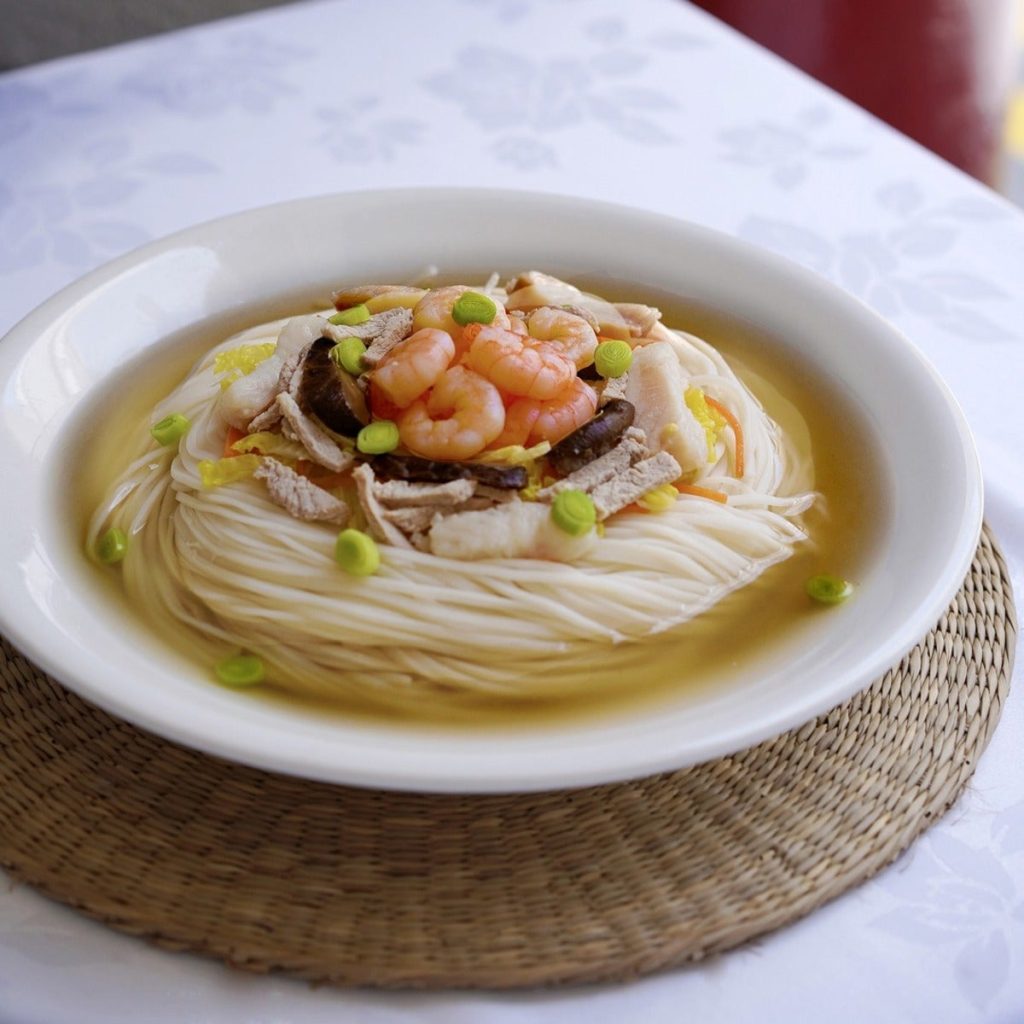
Many of Singapore’s most popular Hokkien dishes are associated with major Chinese festivals, although they can also be eaten year-round. A glimpse at a traditional Hokkien family’s Chinese New Year spread might reveal such delectable delights as ngo hiang, which are fried rolls consisting of minced pork, water chestnuts, and garlic wrapped in beancurd skin; and tang hoon, glassy noodles made from mung bean starch, often stir-fried with meat floss, shrimp, mushrooms, and other ingredients. On the ninth day of Chinese New Year, one might expect a bowl of mee sua (wheat noodles, also known as “longevity noodles”).5 And perhaps nibble away at what is left of the bakkwa (“dried meat”) gifted by visiting relatives. This savoury-sweet pork jerky, which has been a key part of Singapore’s Chinese New Year culture since the 1950s, is made by marinating pork with sugar, spices and even fish sauce, before being grilled over charcoal to impart a smoky aroma. It draws partly on meat preservation methods from Fujian, where meat was a luxury and locals found ways to make it last longer.6
Popiah, a crepe-like roll featuring garlic paste, sweet sauce, ground peanuts, shredded jicama, bean sprouts, and other fillings, is prepared during major festivals such as Qing Ming in the spring and thought to resemble the wrapping of gold and silver. Its present incarnation, which arose from the 1960s, is markedly different from the popiah sold by early 20th-century street hawkers in Singapore. In those days, shredded bamboo shoots were the main filling but were replaced by jicama because bamboo shoots were harder to find, more expensive, and took longer to cook.7 Other savoury fillings found in Fujian popiah that were subsequently discarded in Nanyang are seaweed, chives, French beans and pork; meanwhile, sweet sauce, a Nonya (or Nyonya) addition, is now usually used in Singapore popiah.
During the Dragon Boat Festival on the fifth day of the fifth lunar month, the Hokkiens traditionally partake of glutinous rice dumplings. These are typically filled with pork, shrimp, mushrooms and chestnuts, although variants including red beans, or alkaline-soaked glutinous rice, are also common. The Mid-Autumn Festival meanwhile calls for Chinese tea, pomelo and mooncakes. While the Cantonese baked mooncake is now the most popular type among the Chinese community in Singapore, the Hokkiens here traditionally consumed a wider, flatter mooncake pastry filled with pork meat, wintermelon and sesame. In early Singapore, some companies and clan associations would participate in a game involving a set of 63 mooncakes of varying sizes, some of them corresponding to rankings in the Chinese imperial examinations. By rolling dice, they stood the chance to win an assortment of mooncakes — the largest of which was named the “top scholar’s mooncake”. This tradition originating in China has all but vanished from Singapore today.
Whenever the winter solstice or Dongzhi rolls by, it is customary to eat tangyuan, glutinous rice balls whose round shapes represent unity. These were sometimes dyed red and eaten plain — although store-bought varieties today tend to contain sesame, peanut, and red bean fillings. Some traditional Fujian practices surrounding tangyuan are no longer practised in Singapore: such as fashioning wheat flour balls into the shapes of domestic animals and livestock to represent the idea of liu chu xing wang (thriving animals); or sticking tangyuan on windows, doors and furniture so rats did not nibble away at other things in the house.
Like the Teochews and other dialect groups, the Hokkiens typically offered kueh (steamed cakes) to deities and ancestors. These include ang ku kueh (mung bean paste enclosed in red glutinous rice skin), huat kueh (fluffy steamed cakes), muah chee (chewy glutinous rice chunks coated in crushed peanuts and sugar), and kee ah kueh (alkaline rice cake). Another popular kueh is ban chang kueh (pancake), although it is not commonly used as an offering.
Vanishing foods
Some now-rare Hokkien foods in Singapore are testament to the hard lives of Singapore’s early pioneers. One of them was mee teh, a thick, paste-like soup served by street vendors who mixed fried wheat flour with browned onions, sugar, and hot water. This particularly filling dessert, which was usually washed down with Chinese tea, had all but vanished from the hawker scene by the early 1990s.8 Similarly, mee sua gor, comprising mee sua cooked into a paste-like soup, is not very common in Singapore today.9 Other lesser-known foods are wah kueh (literally “bowl cake”, a savoury steamed rice cake once sold by street hawkers) and chiu tzu kueh (steamed tapioca cake, more commonly seen today is the Nonya version that coated with coconut flakes). Peanut soup, comprising whole boiled peanuts in a sweet syrup, is also vanishingly rare, although canned versions can still be found in supermarkets.10 The waning popularity of these dishes could be due to Singapore’s increasingly affluent population, and its cosmopolitan, multicultural culinary landscape where foods from different dialect and ethnic groups jostle for attention.11
In some cases, the rarity of the dish might be related to the difficult work that goes into making it. Ngo hiang fenti, a cold dish resembling sliced salami, thought to have originated in Quanzhou, is made by stuffing marinated minced meat into a sleeve of pork trotter skin, tying it up with string, steaming it, and then chilling it. Extracting the pork trotter skin requires exceptional knife skill: while the trotters are shorn of bone and meat, the skin must remain unbroken.12
Another deceptively difficult dish is sweet potato cake, where pieces of steamed cake made from sweet potato flour are fried with ingredients such as shrimp, mushrooms, and garlic. It loses its characteristically springy texture when the proportions of sweet potato flour and water are incorrect.
Changing with the times
Singapore’s Chinese restaurant scene took off from the mid-20th century as Singapore’s economy improved.13 Hokkien food, however, was never a mainstay of the local fine dining scene. Today, only a few traditional Hokkien restaurants remain. Old stalwarts include Beng Thin Hoon Kee Restaurant, which was founded in Hokkien Street in 1946 before moving to the OCBC Centre in Chulia Street in 1979; Beng Hiang, which opened in Amoy Street in 1978 before relocating several times; Quan Xiang Yuan, a fixture of Jalan Besar since 1981;14 and Good Chance Popiah, founded in 1977. But even more establishments have lowered their shutters over the years, including restaurant Bee Heong Palace (1981) and traditional pastry shop Tan Hock Seng (1931), the latter citing challenges such as the lack of a successor to take over the business.15 Another notable example is the once well-known Hokkien restaurant Prince Room Restaurant, which was founded in 1961 at Raffles Place, relocated in 1970 to Selegie Road, and eventually closed down in 1995. The restaurant in its heyday welcomed a diverse range of customers from not just different Chinese dialect groups, but also different ethnic communities, as it was located in the Little India area.16
Surviving Hokkien restaurants have modified their menus to cater to changing tastes — substituting lard with vegetable and peanut oil; introducing non-Hokkien dishes like cereal prawns, coffee pork ribs and orh nee (taro paste); experimenting with new dishes such as dry bak kut teh; and striking off less popular items such as braised pork liver.
Even as organisations such as the Singapore Hokkien Huay Kuan continue to promote Hokkien food through festivals and other events, many traditions are falling out of favour with younger Hokkiens. They are less likely, for example, to patronise heritage Hokkien restaurants or make bak zhang, tangyuan, and ang ku kueh from scratch at home, favouring store-bought versions or eschewing such traditional foods altogether. In an era that values convenience and novelty, the future of Hokkien food in Singapore — where consumers are spoilt for choice with cuisines from all over the world — depends on the ingenuity of Hokkien chefs, and the public’s interest in keeping old traditions alive.
| 1 | Less common in Singapore, however, is the traditional pork belly dish of fengrou which originated from the district of Tong An in Xiamen, Fujian. This typically involves cutting the meat into a square chunk, wrapping it in cloth, soaking it in lard and seasoning, frying it, and then braising it for several hours — producing a meat that is so tender it melts in your mouth. See Mok Mei Ngan,, “Lao zihao Fujian caiguan zisun zhang shao lu huo bu xi” [At old Hokkien restaurants, the younger generation keeps the flame alive], Lianhe Zaobao, 15 January 2011. |
| 2 | It was very similar to “Nonya mee”. |
| 3 | Ling Tek Soon, “Minnan meishi: rougucha qiyuan xilun” [Hokkien cuisine: The cultural origin and evolution of bak kut teh], 228–242. |
| 4 | Author’s interview with Albert Lim, son of the founder of Beng Thin Hoon Kee Restaurant, 30 December 2025. |
| 5 | Mee sua is also eaten during birthdays, when it is paired with two eggs that have been dyed red. |
| 6 | The oldest-surviving bakkwa establishment in Singapore is Kim Hock Guan, founded by two Fujian immigrants along Rochor Road in 1905. Cantonese-style bakkwa, commonly known as long yok, was more salty than sweet, with firmer, chewier cuts of meat, usually from the pig’s hindquarter. |
| 7 | Liew You Choo, “Baobing xiao mian su li da gong” [Though the pancake is small, its crispy crust does the heavy lifting], Shin Min Daily News, 15 April 2018. |
| 8 | “Staple of the pioneers,” The Straits Times, 24 February 1990; “Hokkien mee teh,” New Nation, 19 June 1980. |
| 9 | Author’s email interview with Wong Chiang Yin, 8 October 2025. |
| 10 | Peanut soup dessert used to be available on request at Beng Thin Hoon Kee Restaurant. Author’s interview with Albert Lim, 30 December 2025. |
| 11 | Author’s interview with Albert Lim, 30 December 2025. |
| 12 | The dish is served at Quan Xiang Yuan restaurant with a Nanyang twist: chilli sauce. |
| 13 | Mok Mei Ngan, “Lao zihao Fujian caiguan zisun zhang shao lu huo bu xi” [At old Hokkien restaurants, the younger generation keeps the flame alive], Lianhe Zaobao, 15 January 2011. |
| 14 | The founder had plied his wares in Bain Street and Victoria Street before setting up Quan Xiang Yuan. |
| 15 | Gaya Chandramohan and Joyce Yang, “Tan Hock Seng bakery prepares to close after 90 years — but a potential buyer awaits,” CNA, 30 October 2021. |
| 16 | “Taizi lou de cangsang” [Prince Room Restaurant through the times], Lianhe Zaobao, 21 October 1984; Perng Peck Seng and Tan Kian Choon et al., Tou lu: Xinjiapo fujian ren de hangye [Headways: The professions of the Singapore Hokkiens] (Singapore: Singapore Hokkien Huay Kuan, 2008), 228–229. |
Lai, Chee Kien. Early Hawkers in Singapore: 1920s to 1930s. Singapore: Straits Times Press, 2020. | |
Ling, Tek Soon. “Minnan meishi: rougucha qiyuan xilun” [Hokkien cuisine: The cultural origin and evolution of bak kut teh]. In Minnan wenhua zai Xinjiapo lunwen ji [Essays on Hokkien culture in Singapore], edited by Kua Bak Lim, 228–242. Singapore: Singapore Amoy Association, 2025. | |
Liew, You Choo. “Fujian chaomian bian bian bian” [The different faces of fried Hokkien mee]. Lianhe Zaobao, 27 March 2005. | |
Liew, You Choo. “Rougan de qianshi jinsheng” [Bakkwa: then and now]. Lianhe Zaobao, 30 January 2005. | |
Loo, Anthony and Samantha Lee. Uncle Anthony’s Hokkien Recipes. Singapore: Epigram Books, 2015. | |
Mok, Mei Ngan. “Lao zihao Fujian caiguan zisun zhang shao lu huo bu xi” [At old Hokkien restaurants, the younger generation keeps the flame alive]. Lianhe Zaobao, 15 January 2011. | |
Perng, Peck Seng and Tan Kian Choon et al. Tou lu: Xinjiapo fujian ren de hangye [Headways: The professions of the Singapore Hokkiens]. Singapore: Singapore Hokkien Huay Kuan, 2008. | |
Ruan zhe shi ren: Xinjiapo Fujian ren de xisu [Customs of the Singapore Hokkiens]. Singapore: Singapore Hokkien Huay Kuan, 2009. | |
Tan, Chee Beng and David Wu, eds. Changing Chinese Foodways in Asia. Hong Kong: The Chinese University of Hong Kong Press, 2001. | |
Tang, Ai Wei. “Quanzhou fengwei Fujian pushi de jiaxiang wei” [Quanzhou-style Hokkien food, humble flavours of home]. Lianhe Zaobao, 1 August 2020. | |
Wong, Chiang Yin. How to Eat. Singapore: Focus Publishing, 2021. | |
“Xinjiapo fangyan zuqun caiyao zhi yi: Fujian cai” [Food of Singapore’s dialect communities: Hokkien cuisine]. Lianhe Zaobao, 24 October 2017. |