Hainanese food in Singapore


The Hainanese were one of the last Chinese dialect groups to emigrate to Singapore, mostly in the late 19th century. This was when Hainan Island became more open for foreign trade and seafaring activities.
Since the lucrative jobs and businesses in early Singapore, like those in trade and commerce, were already taken by earlier immigrants like the Hokkiens, the Hainanese mostly worked in the service sector. They took up roles as cook boys and waiters in hotels and restaurants, as well as domestic servants in British or Peranakan households. Many also became seafarers and were chefs on board ships.
Their involvement in such trades had a significant influence on Hainanese cuisine in Singapore, especially in adapting the dishes based on local tastes.
Hainan’s famous delicacies
There are four signature dishes of Hainan, but not all have become popular in Singapore. The first is dongshan lamb, from the sheep found on Dongshan Peak in Wanning City. As the animals feed on tea leaves, the meat is known for being less gamey. The meat is fried or braised in coconut milk, while some versions cook the meat with watermelon. It can also be served as a stew, with the mutton cooked with its skin intact with spices like tangkwei, ginger, garlic, star anise, pepper and white sesame. The dish also usually has more bony cuts and the meat is more chewy than how Singaporeans usually have their mutton.
The second delicacy is jiaji duck, also named after its origin, the town of Jiaji along the Wanquan River, in the east of Hainan Island. The ducks, kept in pens, are fed grain and bean curd, and are known for their plump flesh and fatty texture. The bird is usually boiled or steamed, then diced and eaten with sesame oil, vinegar and ginger. In Singapore, some versions add pineapple cubes.
The third dish is hele crab, from Hele town in Wanning, south of Jiaji. Farmed from waters that are a mix of salt and fresh water, the crustacean is usually steamed and served with a garlic, ginger and vinegar sauce.
These three dishes are less commonly found in Singapore today due to a lack of market demand and the availability of ingredients. However, an adaptation of the fourth and final dish continues to leave an indelible mark on the country’s food culture.
The rise of chicken rice
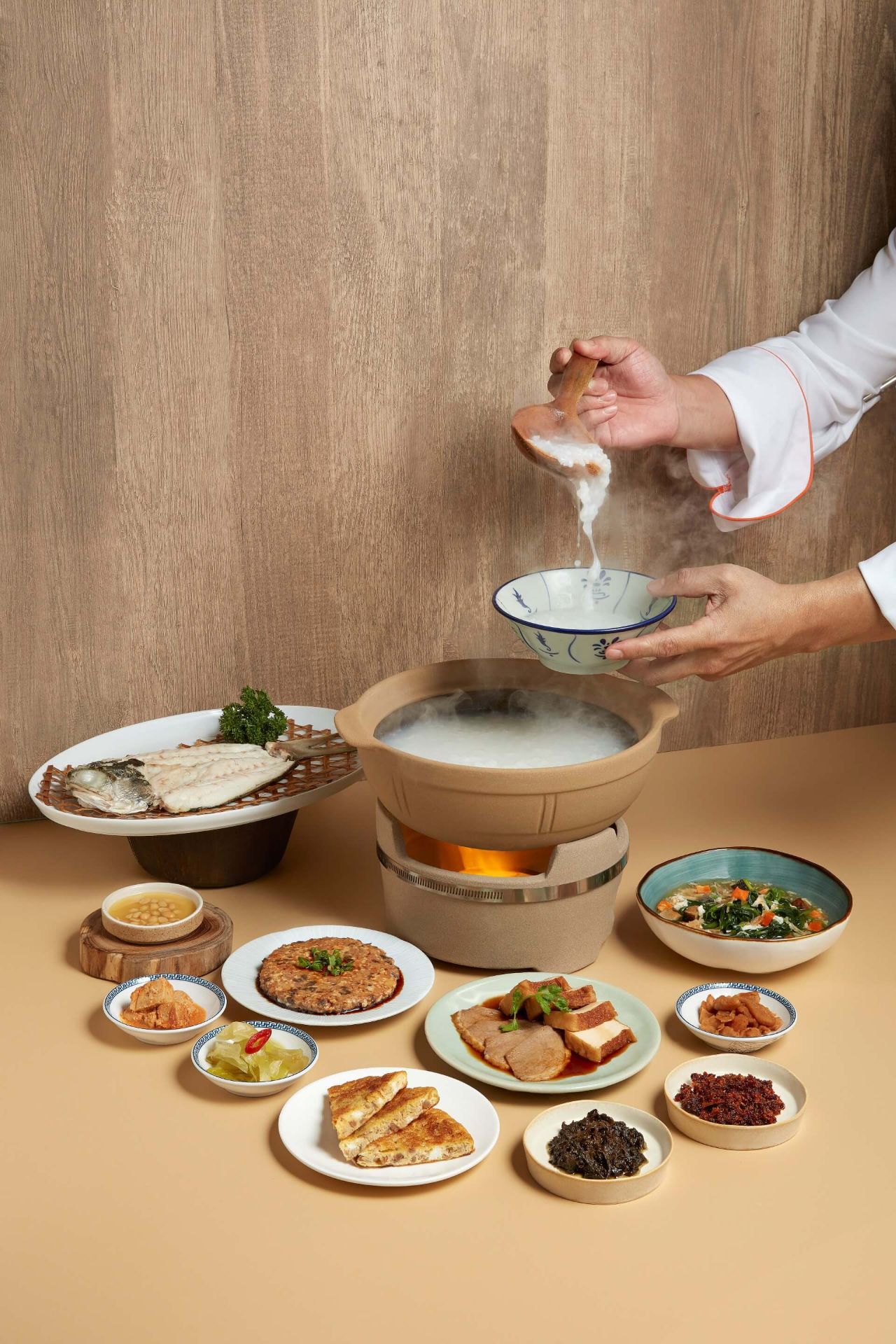
Mention Hainanese, and Hainanese chicken rice will inevitably come to mind. The local favourite has been elevated to a national dish that is a must-try for tourists.
The dish originated from Wenchang chicken rice, created in the city of Wenchang in north-eastern Hainan. The purebred, free-range Wenchang chickens are raised in coconut groves and fields. Some go through a meticulous breeding process, with farmers feeding the chickens a natural diet of smashed peanuts, shredded coconut, sweet potatoes and rice. This regimen is said to result in more tender meat, thin and crispy skin and fragrant bones.
The chicken is boiled, cut and dipped in a mix of ginger, salt and other spices — and sometimes wine — before being served with rice cooked in the chicken oil.
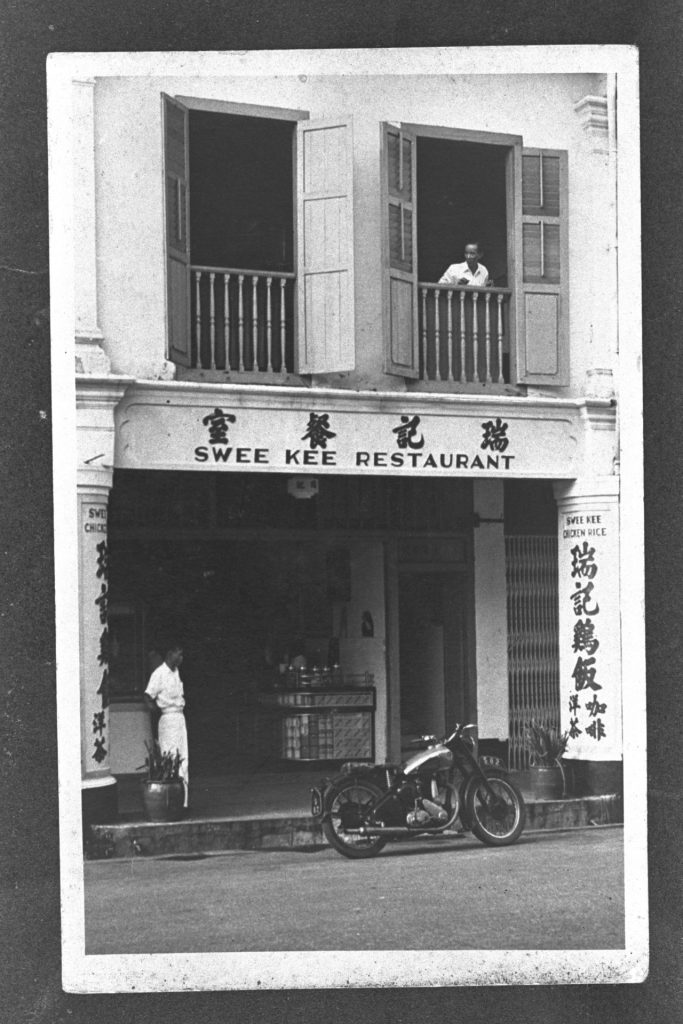
The Hainanese first started selling chicken rice in the Beach Road area around the 1930s to 1940s,1 with pioneers like Wong Yi Guan hawking the dish from two bamboo baskets perched across his shoulders. His apprentice, Mok Fu Swee, popularised chicken rice through his restaurant Swee Kee.2 It is said that Mok would personally select the live chickens just by feeling their bellies, keeping the good ones and rejecting the unsatisfactory fowl.3
The local version of chicken rice has evolved to infuse local flavours. The first difference between Wenchang chicken rice and Singapore’s chicken rice is the stock used. Chefs in Hainan use pork-bone and chicken-bone stock, while the pork base is not present in the Singapore version to cater to Muslim customers.
The type of bird used is also different, with Singapore stalls using chickens available in the country instead, usually from Malaysia. Examples include the French Poulet species originally from Sabres, France, which has firmer and more flavourful meat.4 Hainanese chefs in Singapore have also used young and tender-fleshed birds, the kind used by the Cantonese for their pak cham kai (white cut chicken).
The Hainan Island chefs would extract more oil from the chicken to make the rice fragrant, often pre-cooking the grains by frying them in the fat, while cooks in Singapore would avoid this step to keep the dish less oily. Instead, they would cook the rice in the chicken broth, with some cooking it in an aluminium pot — observing, stirring and adding the broth in stages until the rice reaches the right texture and hydration.5 The addition of pandan leaves also adds extra fragrance to the rice.
The differences extend to the sauces too. Local chilli dips are spicier, often with a hint of lime, sambal belacan style, allegedly due to Indian and Malay influences. In Hainan Island, the sauce is a mix of ground green chilli and ground ginger, with onion and oil added.
Of Hainan origin also is chicken rice balls (bui jian). They are moulded by hand while the rice is piping hot, offering a convenient way for the dish to be eaten on the go. It is often associated with special occasions, and it is said that the Hainanese would also pack the rice balls on their treks to the hills during the Qing Ming festival, or use them as offerings to the gods or ancestors. While these are hardly found now in Singapore, they are still popular in Malacca.
Other Hainanese meat dishes
Besides chicken, the Hainanese also have an appreciation of mutton. Dishes like dongshan lamb bring significance as goats are only slaughtered on special days such as weddings, due to the double-meaning of the name (xi qi yang yang) that also represents joy.6
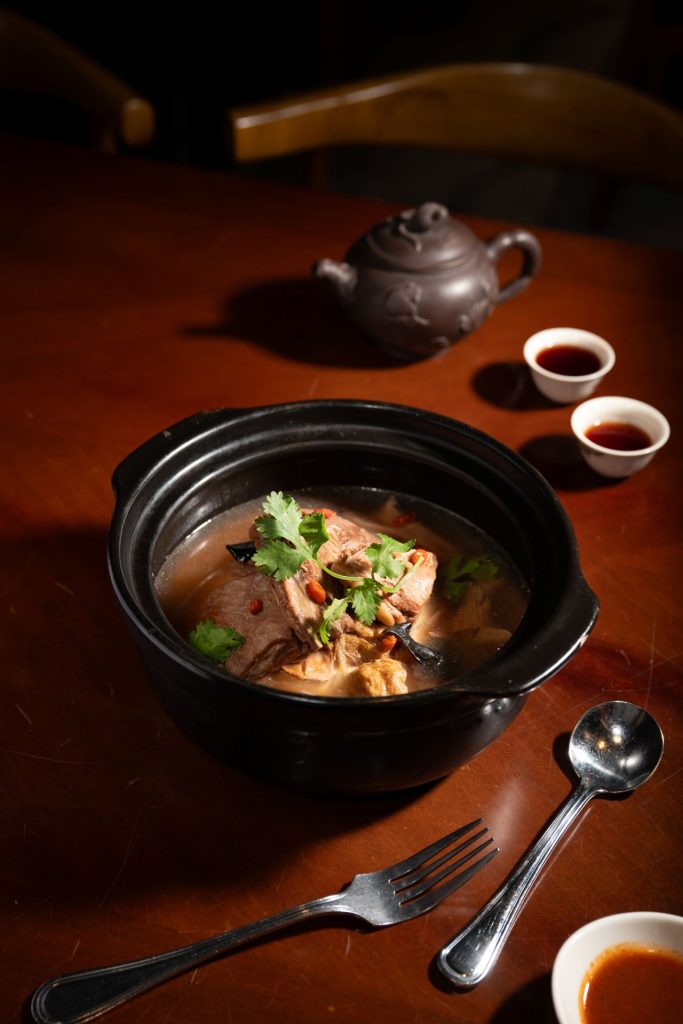
In Singapore, the Hainanese mutton soup is a robust, herbal concoction that has a distinct aroma of red fermented bean curd (nam yue). Ingredients like puff tofu, black fungus, bean skin and ginger complete the broth. The dish was said to be popular among Hainanese wharf workers living in dormitories, as the “heaty” element of the mutton would keep their bodies warm during the cold nights.7
Another red meat that Hainanese are fond of is beef, especially when it comes with a dark, thick, starchy, umami-filled gravy. Hainanese-style beef noodles (gu bak kway teow) is usually served dry with soup on the side. The gravy, made of beef stock, black soy sauce and sweet potato starch, is poured on the thick white noodles. The soup, brewed for hours, is flavoured with herbs and spices. Usually served with beef slices, the gooey dish can also be accompanied by beef tripe, tendons and balls, as well as pickled vegetables (suan cai) and crushed peanut toppings.8
Condiments include shrimp sauce (cincalok), which is considered unique to Southeast Asia, and a sharp, tangy chili sauce. The Singapore version of beef noodles is said to have evolved from the Hainanese version, called hainan fen (Hainanese noodles), which features bamboo shoots for more texture and tends to have a less “beefy” taste.9 It may also comprise pork, and some versions use dried beef that tastes like bak kwa (barbecued pork) instead of fresh beef.
Hainanese braised pork belly is a dish that is less commonly featured. While the Cantonese version is braised with taro, the Hakkas do so with preserved vegetables and the Hokkiens use a five-spice blend, the Hainanese interpretation is cooked with cuttlefish and dried shrimps for maximum umami.10
Hainanese snacks
Besides full-flavoured main courses, there is an assortment of Hainanese snacks in Singapore that have also originated in Hainan Island.
One of them is the Hainanese mooncake (su yan bing), which is eaten in celebration of the Mid-Autumn Festival. It is a flaky pastry with a savoury-sweet, peppery filling. It is shaped in a traditional wooden mould and also contains other ingredients like candied orange peel, rose sugar, fried shallots and melon seeds.
Another traditional Hainanese snack is yi bua. Wrapped in a banana leaf, it contains grated coconut, peanut, sesame and ginger encased in sticky, chewy glutinous rice flour. The rice flour has to be pounded to achieve a mochi-like texture. The Singapore version may also contain gula melaka, a type of palm sugar unique to the Southeast Asian region. A variation of yi bua is the tar kat lau, which is made of the same ingredients but instead of being round, it is shaped like a pyramid as there is good fortune associated with the triangle in Hainanese culture. The tar kat lau is often consumed when celebrating the birthdays of elders, as well as to commemorate the Lunar Leap Year.11
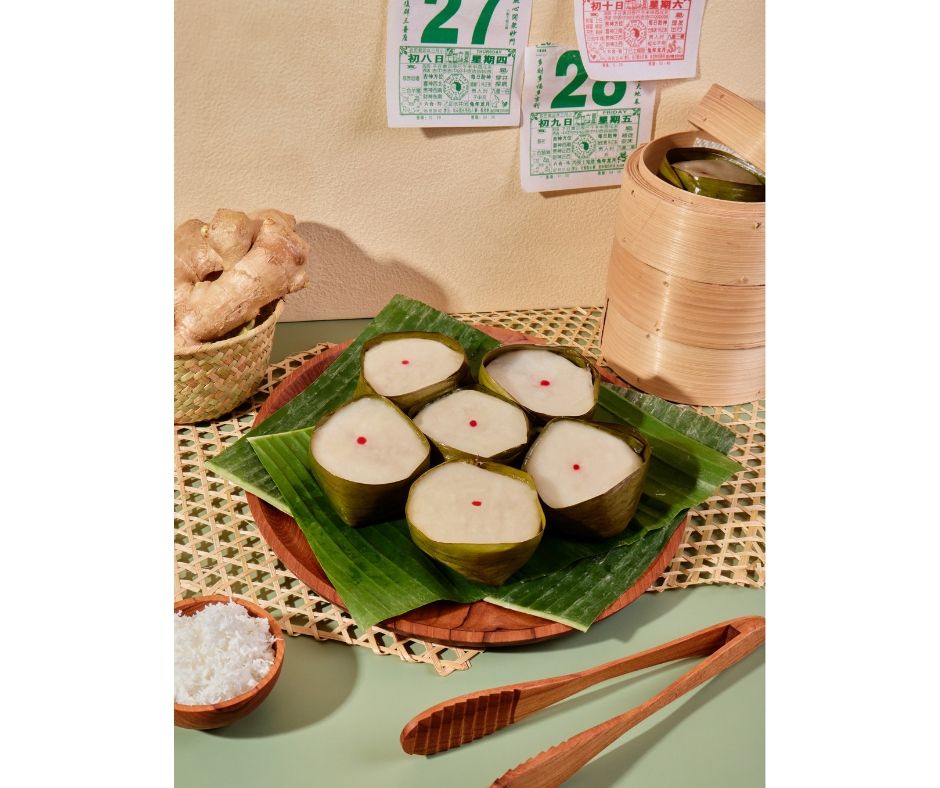
Yet another version of the yi bua is the bua art, which essentially is the yi bua turned inside out. Bua art translated in Hainanese literally refers to “flattened kueh”, indicating how the rice flour is pressed before it is topped with the ingredients.
There are other traditional snacks based on glutinous rice, such as hee hao. The rice flour is made into a dough and fried. Some versions are topped with sugar. Hee hao is usually eaten during Chinese New Year, as its deep-fried brown exterior and light insides are said to represent auspicious gold and silver.12
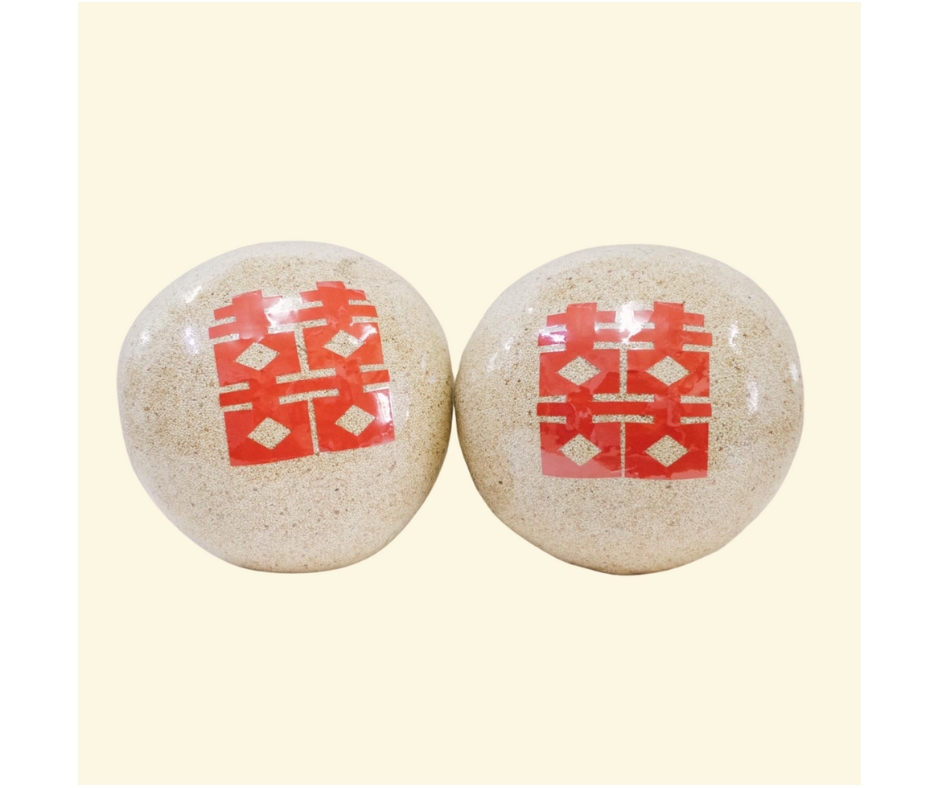
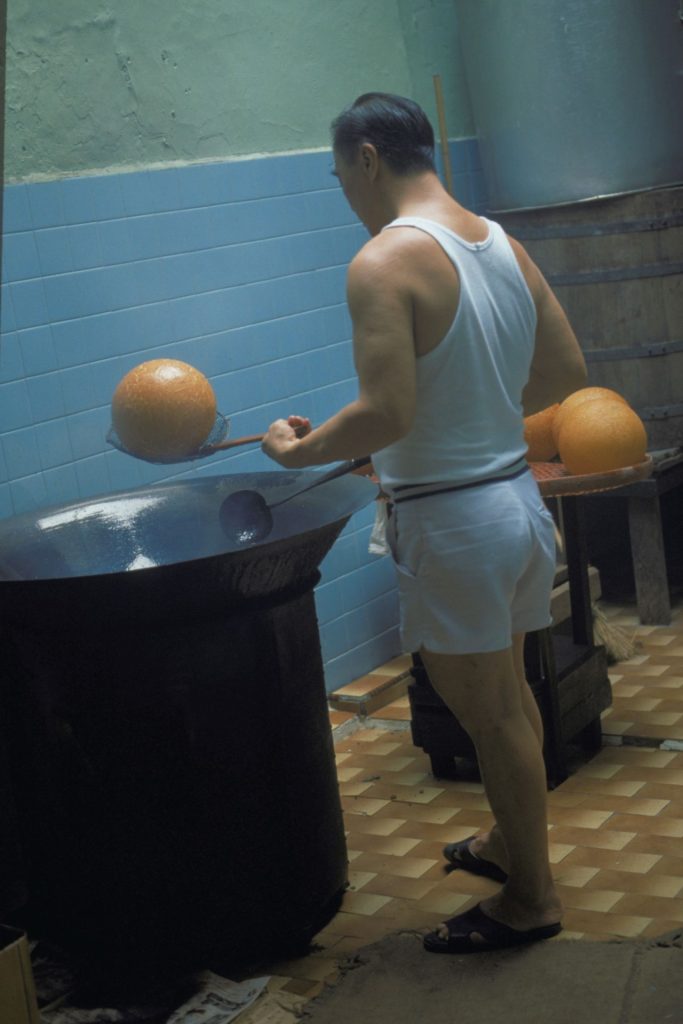
Other deep-fried Hainanese pastries include chin deh, a large hollow ball made of glutinous flour and covered with sesame seeds. In Singapore, Hainanese grooms give a pair of chin deh to the bride’s family during the betrothal ceremony, to symbolise unity and bliss.
An understandably less popular Hainanese dessert now is the “jishiteng bazi” (chicken manure vine dessert), made from the Chinese Fevervine, which has a strong, unpleasant smell reminiscent of chicken droppings. It resembles dull, grey bee tai mak (“mouse tail noodle”) strands and is said to have detoxifying effects. A traditional snack from Qionghai, Hainan, it is hardly found now in Singapore because of its polarising name and arduous preparation. The leaves need to be crushed, their juice extracted then kneaded with glutinous rice flour, before being paired with a sweet ginger and coconut sugar soup.13
Fusion feasts
Due to the Hainanese workers being involved in the British colonial system as cooks and servants, they were one of the first Chinese groups in Singapore to master Western cooking, familiarising themselves with condiments like mustard and HP sauce (a brown sauce).
This extended to beverages as well, where Hainanese exercised their creativity in creating drinks. The Singapore Sling was invented in 1915 by a Raffles Hotel bartender, Ngiam Tong Boon (birth and death years unknown), who wanted to make a cocktail that looked like a fruit punch but had the kick of a gin sling.
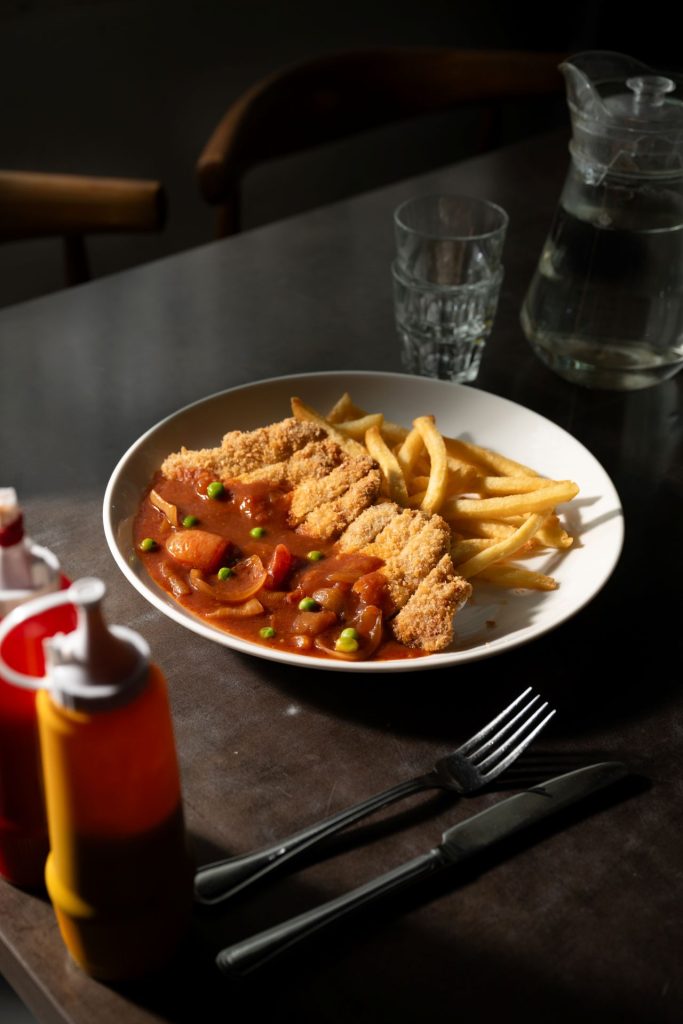
One of the most well-known examples of how Hainanese fashioned uniquely Singaporean-Hainanese dishes is the fried pork chop. It is believed that Hainanese servants in British households were wondering what to do with cream crackers that had crumbled. While the well-formed ones could be served at tea, the broken biscuits could not. Ingeniously, the Hainanese ground them to form batter for strips of pork chop.14 A sweet and sour sauce, with cubed potatoes, onions, tomatoes, green peas, was created to accompany the crispy pork. To add a final Western twist, fries are served. The use of ketchup in the sauce reflects a certain Chinese influence, like the sweet and sour pork dish (gulu rou).15
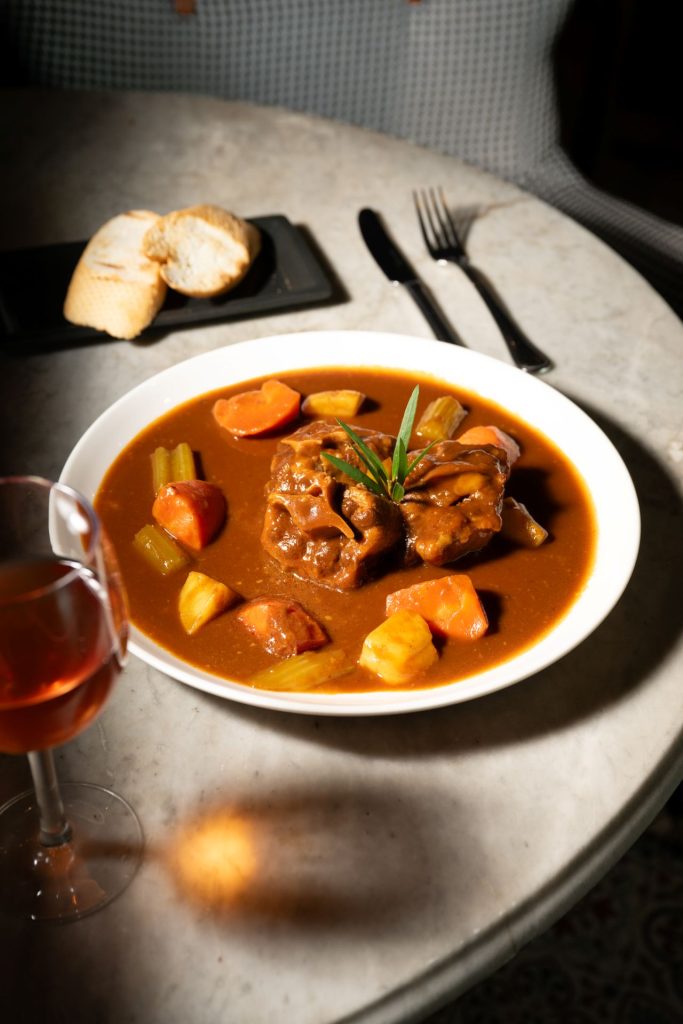
There are a few other dishes with Western influence popularised by the Hainanese in Singapore. Among them is oxtail stew, a classic, hearty English dish featuring beef tail that is gelatine-rich and meat that slides off the bone. While the original British preparation may use barbecue sauce and wine, some local versions may use soy sauce instead. They may also feature a combination of local spices with Worcestershire sauce.16 Several restaurants in Singapore started by Hainanese serve similar Western-inspired dishes.17
The ubiquitous chicken chop seen at “Western” hawker stalls in Singapore also has roots in Hainanese cuisine. Instead of being grilled, the meat is wok-fried with soy sauce and sometimes served with a deep-fried bun and sunny-side up egg.
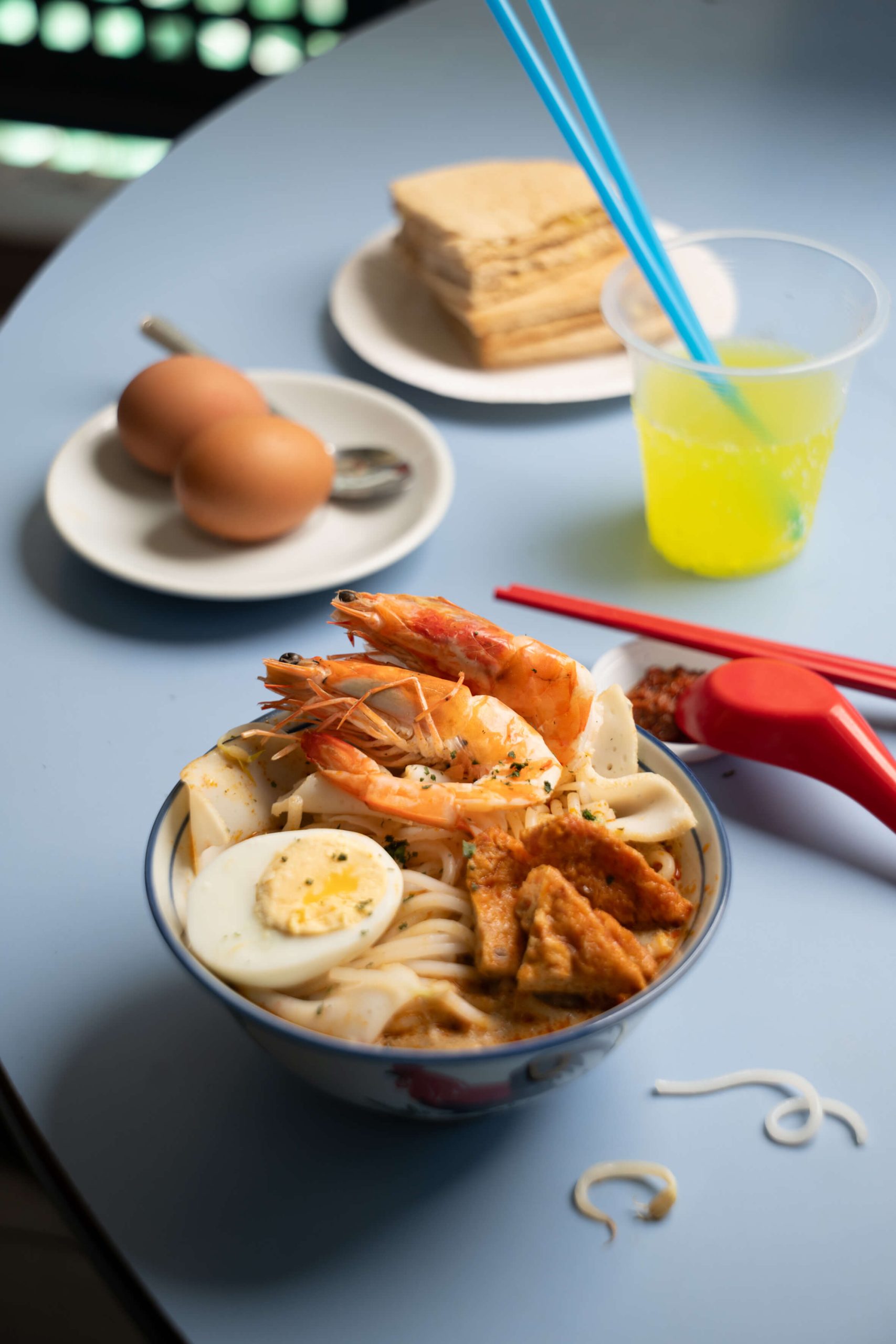
Kaya toast and eggs, commonly recognised now as Singapore’s national breakfast, was also said to be an invention of the Hainanese. With many Hainanese running coffeeshops, or kopitiams, in the post-World War II years, they devised Western-style eggs with toast sets seen in their former employers’ homes. In the absence of jam, as fruits like strawberries were not available in the tropics, these kopitiam cooks used kaya made from coconut milk, eggs and pandan leaves. Instead of half-boiled eggs with salt and pepper, the Hainanese used dark soy sauce (nowadays, light soy sauce is often used).
Besides Western inspirations, the Hainanese also incorporated Peranakan flavours into their food, having also worked in Straits Chinese homes. Curry rice is an example, with babi pongteh (Peranakan braised pork) and chap chye (braised mixed vegetables) and fried pork chop all drenched in curry sauce. The dish is also called scissors-cut curry rice as the Hainanese street hawkers could not afford knives and used scissors to cut the meat in an economical and fuss-free manner without chopping boards.18
Hainan food henceforth
Hainanese food in Singapore has continued to evolve through the years. An example is “Hainanese steamboat”, when a street stall selling Hainanese comfort dishes in the 1950s decided to offer hotpot so that the food would stay warm while customers had long gatherings. The old mother hen broth, which also flavours the chicken rice, is the foundation of the steamboat soup, served with the signature Hainanese sliced beef and fermented bean curd.19
Traditions have been passed down across generations, with younger Hainanese paying homage to the rich heritage but also adding their own flourish. For instance, in 1971, chicken rice was first sold in a hotel, elevating the dish beyond street food.20 Hainanese cuisine has also entered Michelin-starred restaurants, with the introduction of dishes like chicken rice dumpling. Other chefs, such as those making traditional delights like yi bua, are also modifying the cuisine, by slipping these ingredients into cookies or reducing the use of ginger to suit modern tastes.
Hainanese cuisine has made a huge but often understated impact on the Singapore food scene, and the story is still unfolding with the next generation of Hainanese chefs.
| 1 | Among the pioneer chicken rice stalls was Yet Con, which opened in 1940 but closed in 2020. |
| 2 | Restaurants with the name Swee Kee have emerged, but the original Swee Kee Chicken Rice closed in 1997. |
| 3 | Tang Ai Wei, “Cong Ruiji zhaopaixiao yingtan hainan jifan yanbian” [Tracing the evolution of chicken rice through Swee Kee], Lianhe Zaobao, 14 October 2023. |
| 4 | Leslie Tay, “Golden Mile Thien Kee Steamboat Restaurant: Hainanese chicken rice, steamboat and satay!,” ieatishootipost, 9 March 2021. |
| 5 | Author’s interview with Benjamin Boh, owner of Golden Mile Thien Kee Chicken Rice and Steamboat, 2 September 2025. |
| 6 | Margaret Chan, “Hainanese dishes revived,” The Straits Times, 8 November 1992. |
| 7 | Author’s interview with Frederick Puah, owner of British Hainan, 22 August 2025. |
| 8 | Violet Oon, “Sharing that family secret,” The Straits Times, 9 September 1979. |
| 9 | KF Seetoh, “Hainanese Fun,” Makansutra, 1 March 2019. |
| 10 | Tang Ai Wei, “Chuantong jiguan cai nan tao shi chong, dachu bian zhong shou lao weidao” [Traditional dialect cuisines losing appeal, chefs preserve old flavours amid change], Lianhe Zaobao, 11 October 2025. |
| 11 | Author’s interview with Jocelyn Loi, owner of All Things Hainanese, 21 August 2025. |
| 12 | Author’s interview with Jocelyn Loi, 21 August 2025. |
| 13 | “Nande yijian de jishiteng bazi tang” [A hardly seen chicken manure vine dessert], Lianhe Zaobao, 3 August 2019. |
| 14 | Author’s interview with Frederick Puah, 22 August 2025. |
| 15 | Interview with travel and food writer Yap Seow Choong, 2 December 2025. |
| 16 | Cecilia Joven Ong, “Oxtail stew — slow cooked and slowly forgotten,” Makansutra, 30 April 2015. |
| 17 | Jack’s Place and Shashlik Restaurant are examples of these restaurants. Jack’s Place has become a popular chain selling steaks, while Shashlik Restaurant is known for its unique Russian-inspired dishes like borscht soup. |
| 18 | Author’s interview with Frederick Puah, 22 August 2025. |
| 19 | Leslie Tay, “Golden Mile Thien Kee Steamboat Restaurant: Hainanese Chicken rice, steamboat and satay!,” ieatishootipost, 9 March 2021. |
| 20 | Koh Yuen Lin, “Chatterbox’s chicken rice is served boneless — so what happens to its wings?,” Today Online, 11 March 2020. |
Gan, Audrina. “Discover the rich heritage and culinary delights of Singapore’s Hainanese community.” National University of Singapore website, 15 September 2024. | |
Lim, Swee Hong. “A cuisine where East, West meet.” The New Paper, 8 September 1988. | |
Low, Wei Li. Food Hometown. Singapore: Popular Book Co., 2010. | |
Low, Sze Wee, “We are what we eat: The evolution of Chinese food in Singapore.” BiblioAsia 18, no. 1, April–June 2022. | |
Tan, Bonny. “Beef noodles.” National Library Board, Singapore. | |
Vasu, Suchitthra. “Hainanese chicken rice.” National Library Board, Singapore. | |
Wong, Chiang Yin. How to Eat. Singapore: Focus Publishing, 2021. | |
Yip, David. “Hainanese cooking, with its fusion of Chinese and Western, comes back in vogue.” The Straits Times, 16 October 2017. | |
Zou, Wenxue. “Wenchangji yu zhutongfan” [Wenchang chicken and bamboo rice]. Lianhe Wanbao, 1 May 1992. |